
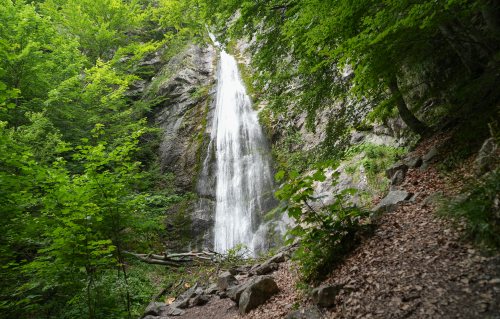
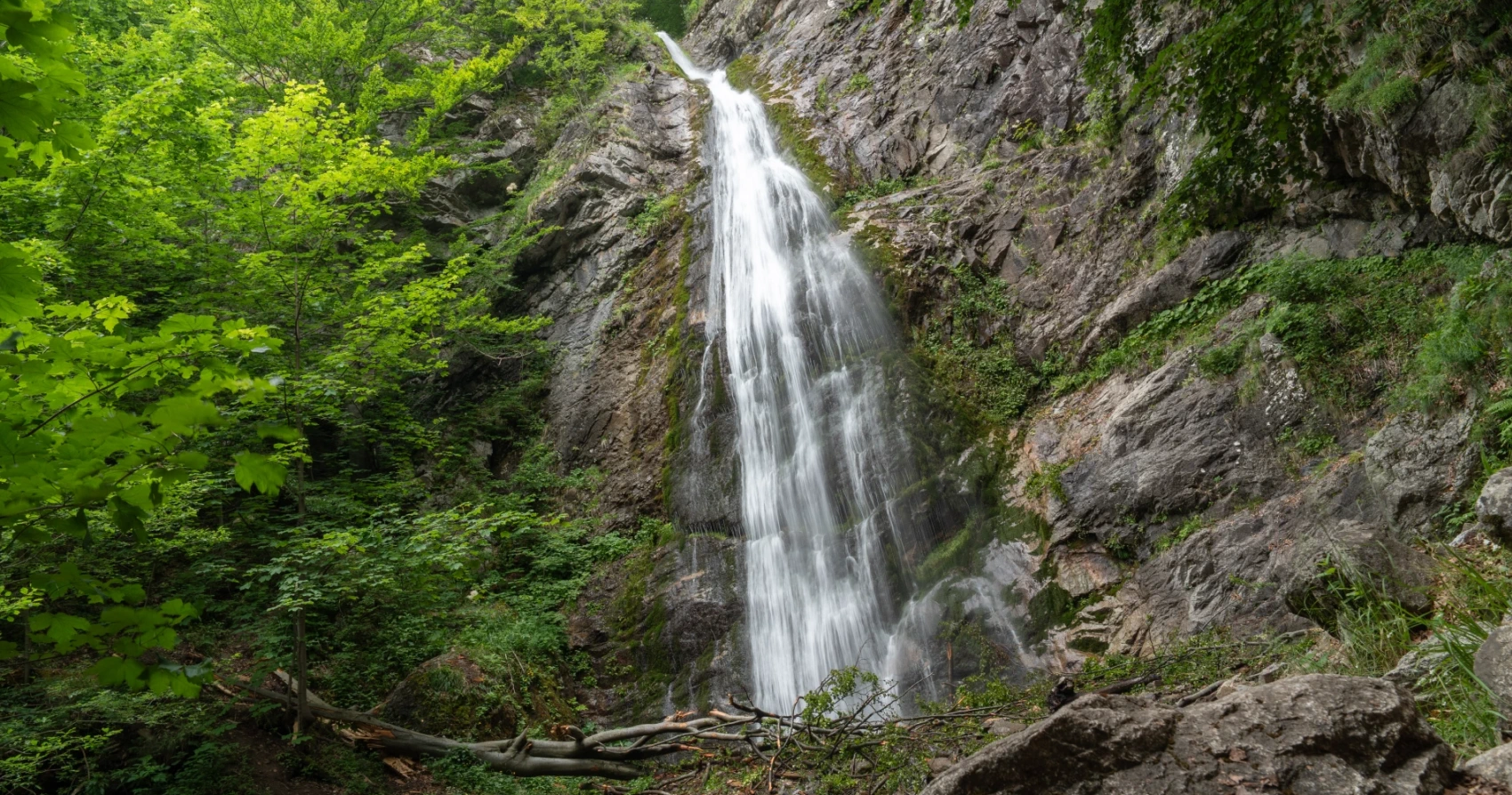
The route to Šútovské vodopád passes through the Šútovská valley, which is one of the most beautiful and best-preserved valleys in the Kriván part of Malá Fatra. The natural conditions of this area are extremely diverse, as it is a deeply cut valley with significant elevation differences and a specific limestone bedrock.
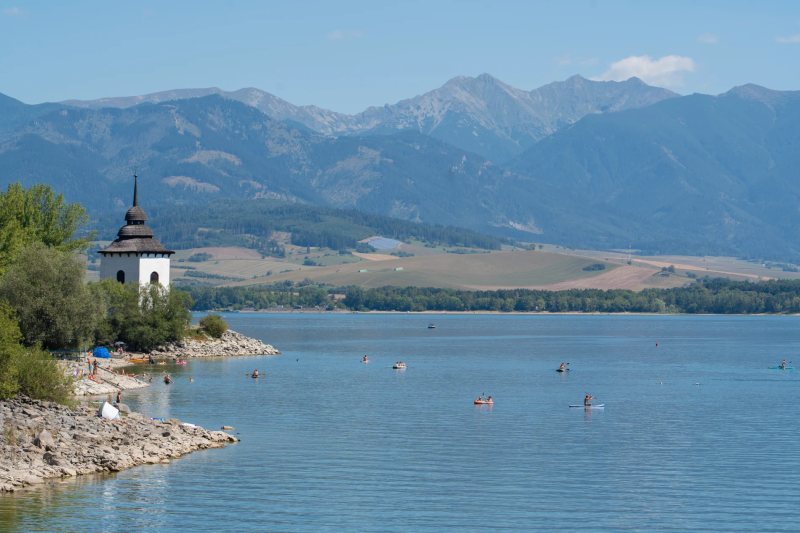
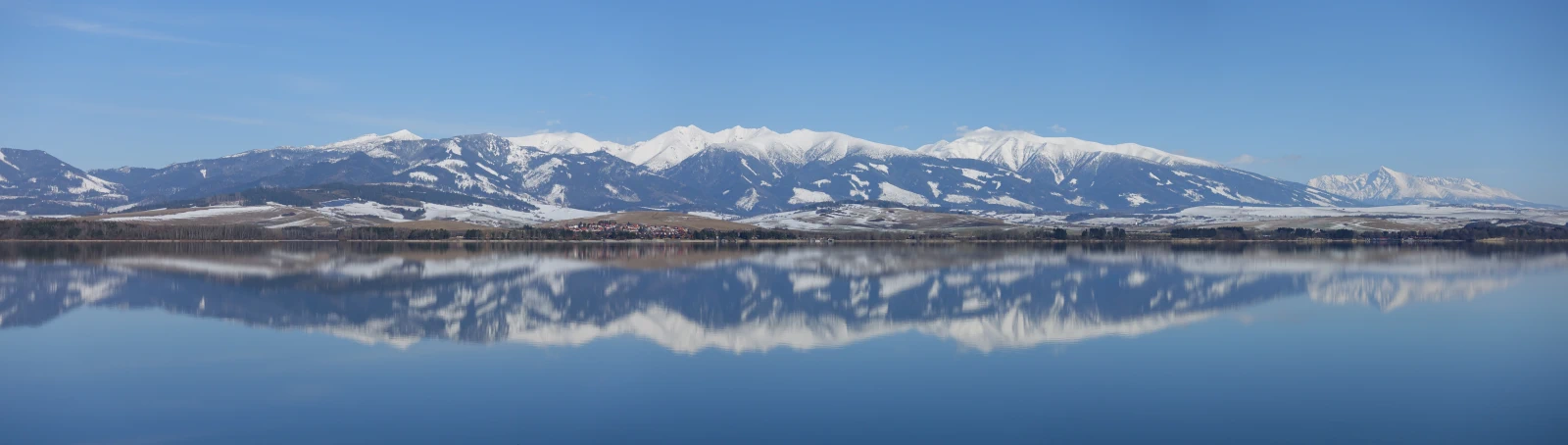
Are you looking for a place where refreshing relaxation by the water perfectly combines with high-mountain hiking? You don't have to travel abroad! Liptovská Mara offers the best of both worlds and is an absolutely ideal starting point for your next active trip.
Slovak Atlantis: Sacrificed Villages
-
Thirteen flooded villages: Due to the construction of the dam between 1969 and 1975, up to 13 villages (e.g., Liptovská Sielnica, Palúdzka, Parížovce, Sokolče, Vrbie, and others) had to disappear completely or partially beneath the water surface.
-
Displacement of thousands of people: Approximately 4,000 residents had to leave their homes. Entire communities were relocated, and for many, new housing estates were built in Liptovský Mikuláš or in the new Liptovská Sielnica.
-
Birthplace of a hockey legend underwater: In the flooded village of Sokolče, the famous hockey player and NHL legend Stan Mikita (born Stanislav Guoth) was born. His family home now lies at the bottom of the dam. The downhill skier Ján Starší was also born in the same village.
Lonely Tower and Relocated History
-
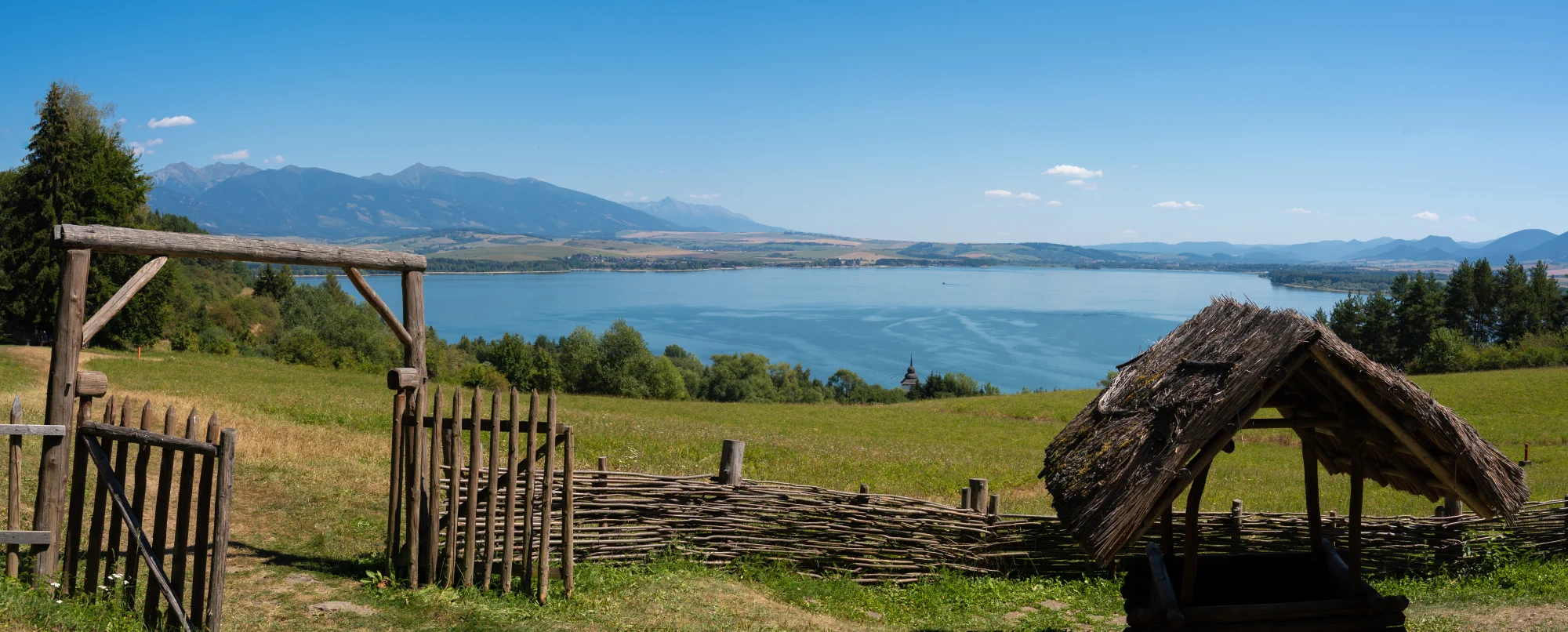
Iconic tower on the shore: The most famous photo spot of Liptovská Mara is the solitary tower of the Early Gothic Church of the Virgin Mary. The rest of the church was dismantled before flooding, and its most precious parts (vaults, portals, frescoes) were transferred to the Museum of Liptov Village in Pribylina, where its exact copy was built.

Gothic manor in the museum: From the village of Parížovce, the Gothic-Renaissance manor house was also rescued and transferred to Pribylina, which was the oldest noble residence in Liptov.
Technical and Geographical "Bests"
-
Largest in Slovakia (by volume): Although the Orava Dam has a larger area, Liptovská Mara is the absolute record holder in volume. It holds an incredible 360.5 million cubic meters of water.
-
Relocation of the railway and roads: The construction of such a gigantic project required the relocation of the main railway line (Košice–Bohumín Railway) over a length of approximately 18 kilometres, as well as the state road.
-
Powerful power plant: Below the dam there is a hydroelectric power plant with four turbines (two Kaplan and two fully reversible Deriaz turbines). In addition to generating electricity, the dam primarily serves as protection against catastrophic floods on the Váh River, which in the past regularly devastated the region.
Mysticism and nature in the surroundings
-
Paradise for birds and anglers: The Ratkovie Peninsula, which extends into the dam, is a protected area with a strict degree of protection (arboretum). The entire water surface is an important ornithological site where rare species of water birds nest and winter. The dam is also known for impressive fish catches (pikeperch, carp, pike).
Photo gallery:


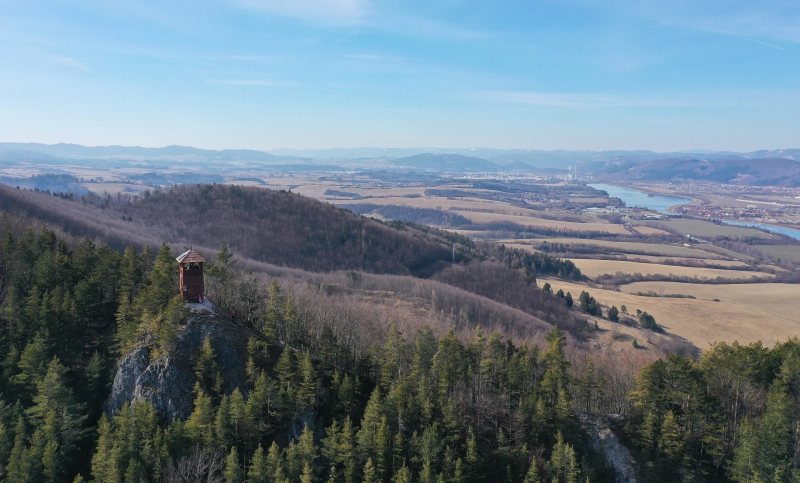
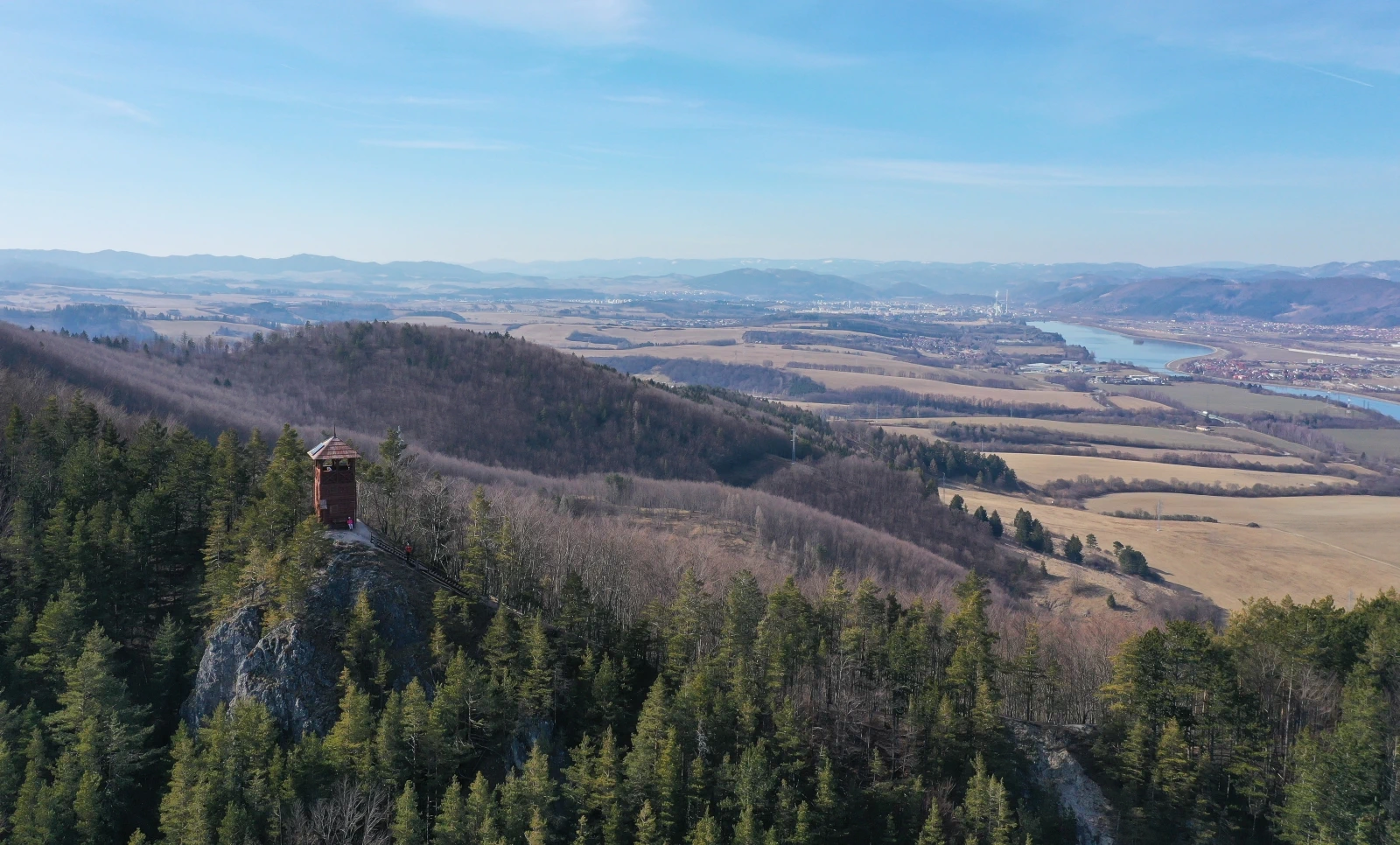
Špičák is known for its fantastic panoramic views. From it, you will see directly Strečno Castle, the ruins of Staré hrad (Starhrad), the Domašínsky meander of the Váh River, the Žilina Basin, and the surrounding ridges of Malá Fatra.
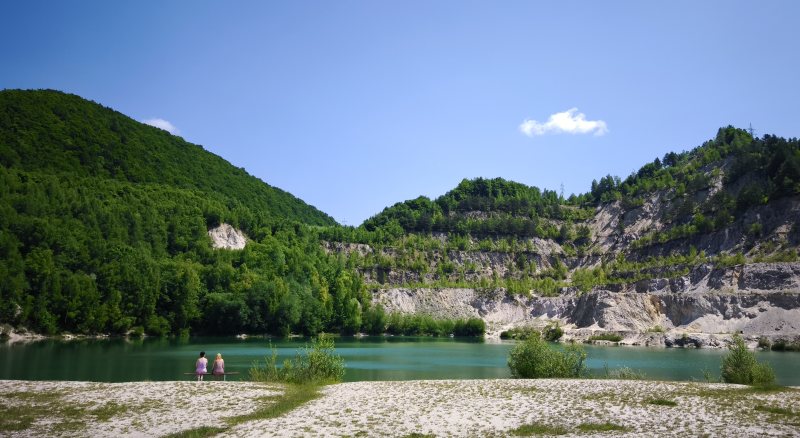
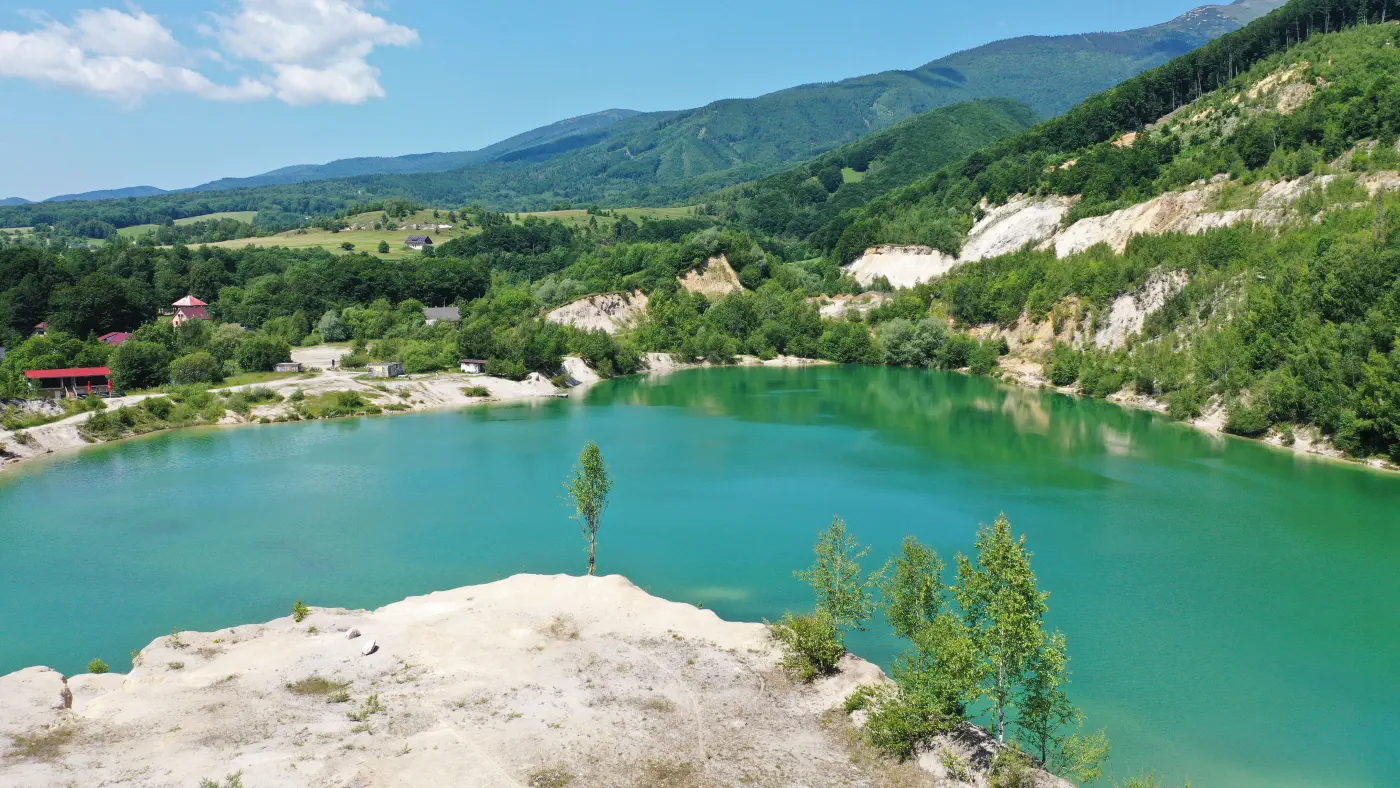
Do you miss the sea, but don't have time for a long trip south? Just head a little beyond Žilina, towards Kraľovany, and you'll discover a place that will immediately remind you of the Croatian coast or the famous Plitvice Lakes. We present to you Šútovské jazero (also known as Kraľovianske jazero in the municipal part of Rieka) – a former quarry that, after being flooded, created one of the most beautiful and photogenic bodies of water in Slovakia!
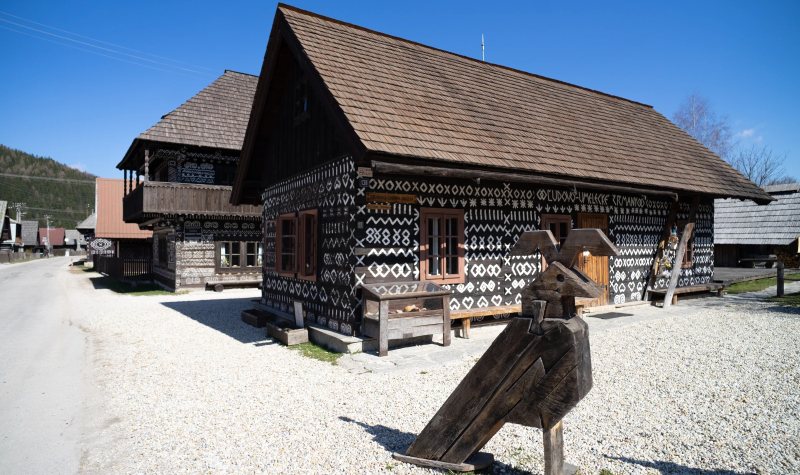
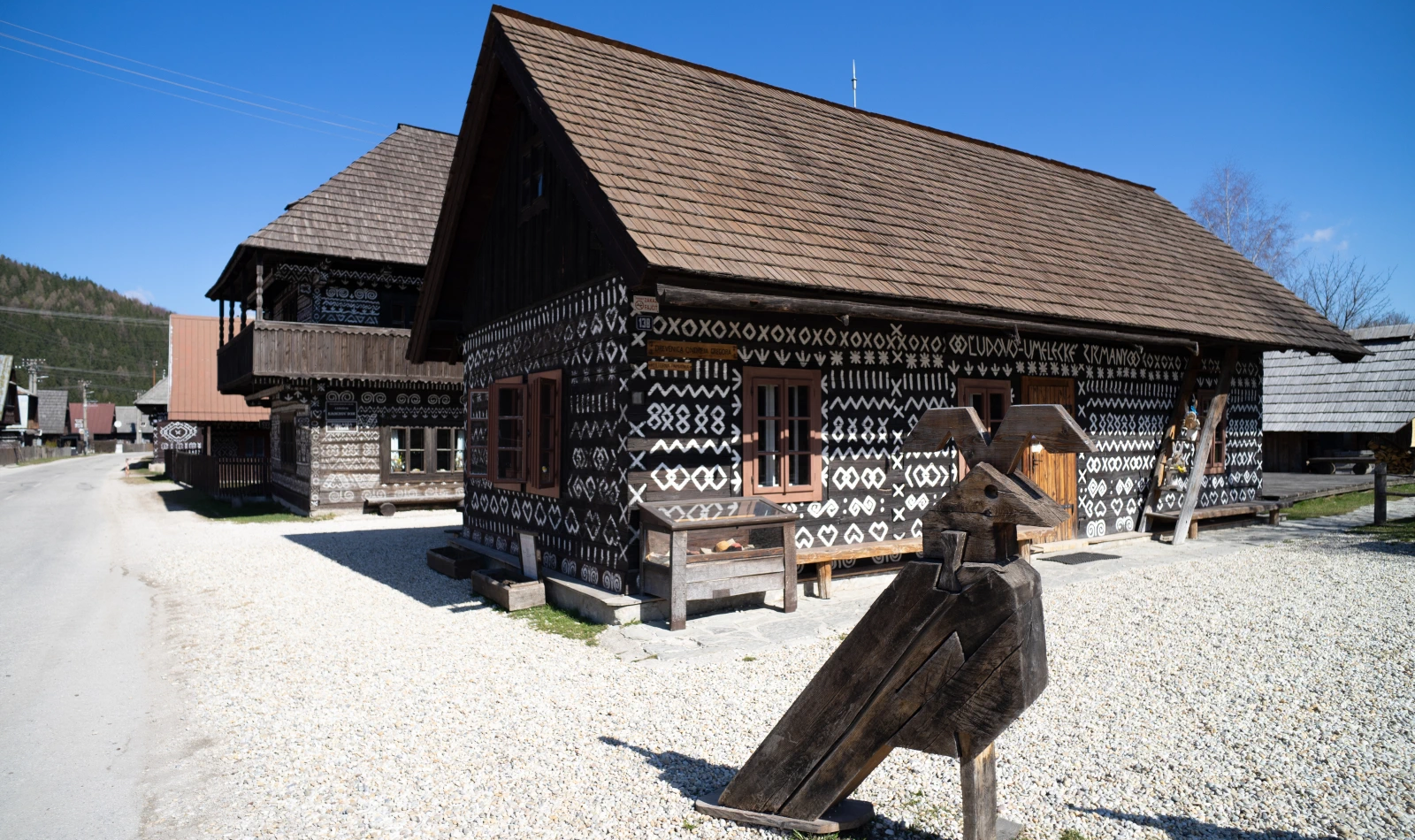
Imagine a place where time seems to have stood still and where traditions have literally seeped into the walls of houses. Čičmany, hidden in the beautiful embrace of the Strážovské vrchy mountains, are the pride of Slovakia and the very first folk architecture reserve in the world.
Painted wooden houses you won't find anywhere else: What made Čičmany famous worldwide are the dark wooden log houses decorated with white geometric ornaments.
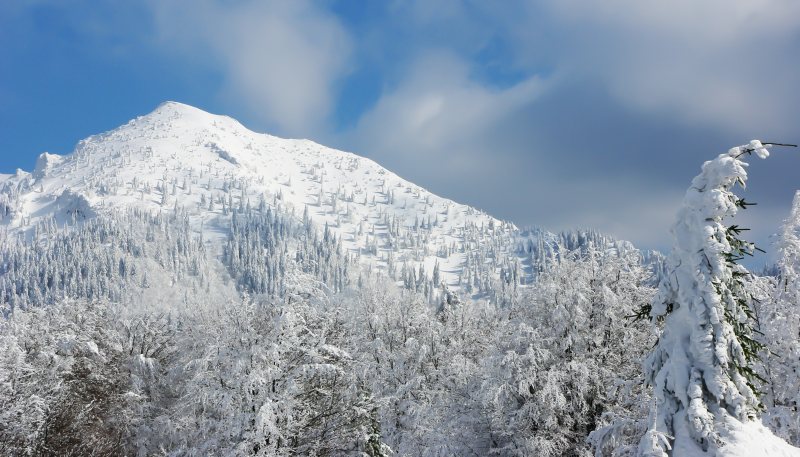
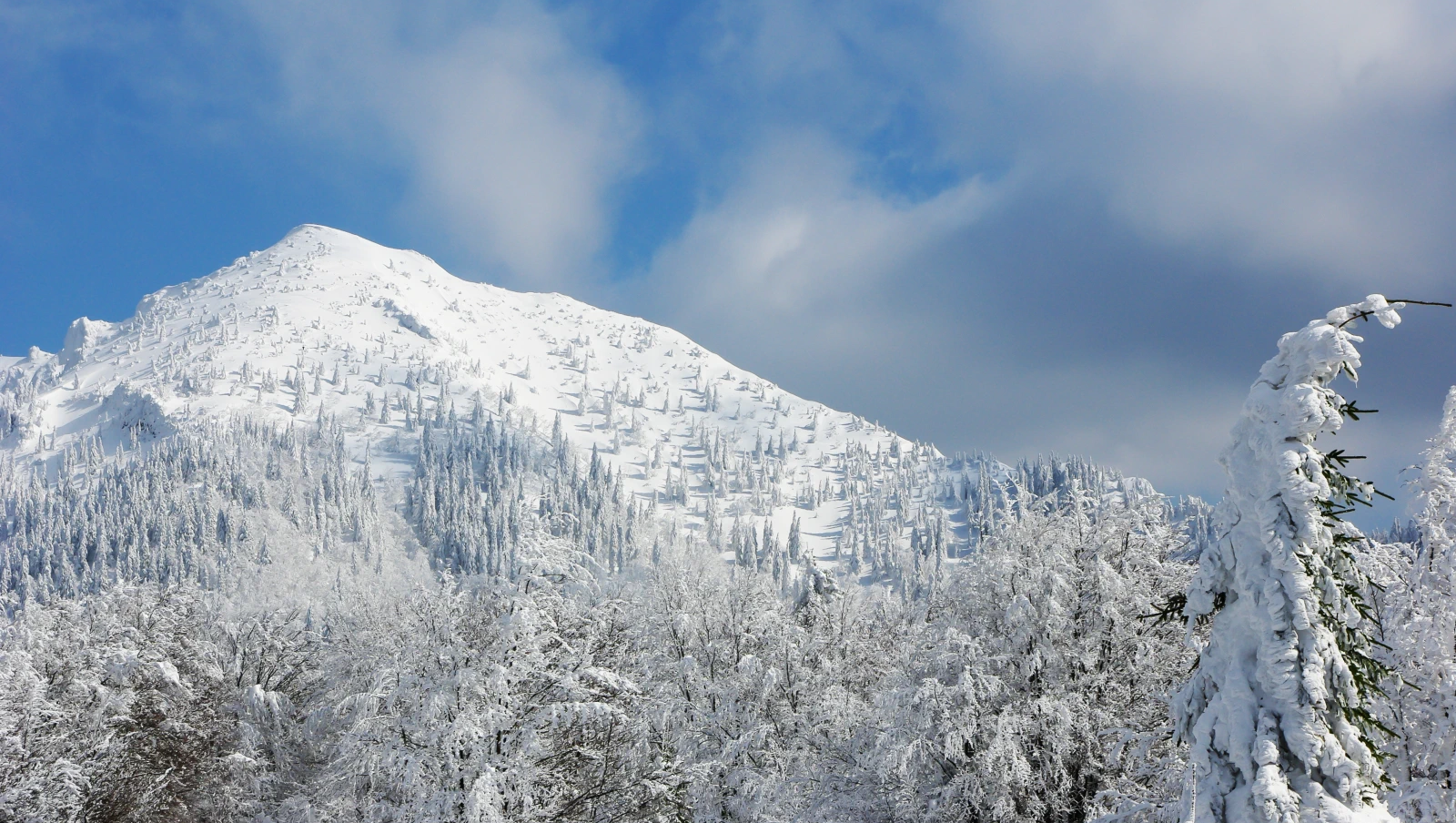
The peak Suchý (1,468 m above sea level) represents the gateway to the main ridge of the Krivánska Malá Fatra from the direction of Strečno. Its surroundings are a fascinating mix of rugged granite wilderness and picturesque mountain meadows, giving it an alpine feel.
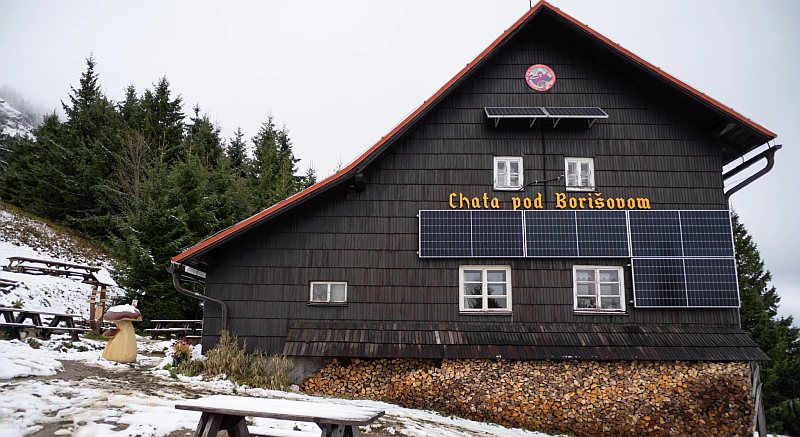
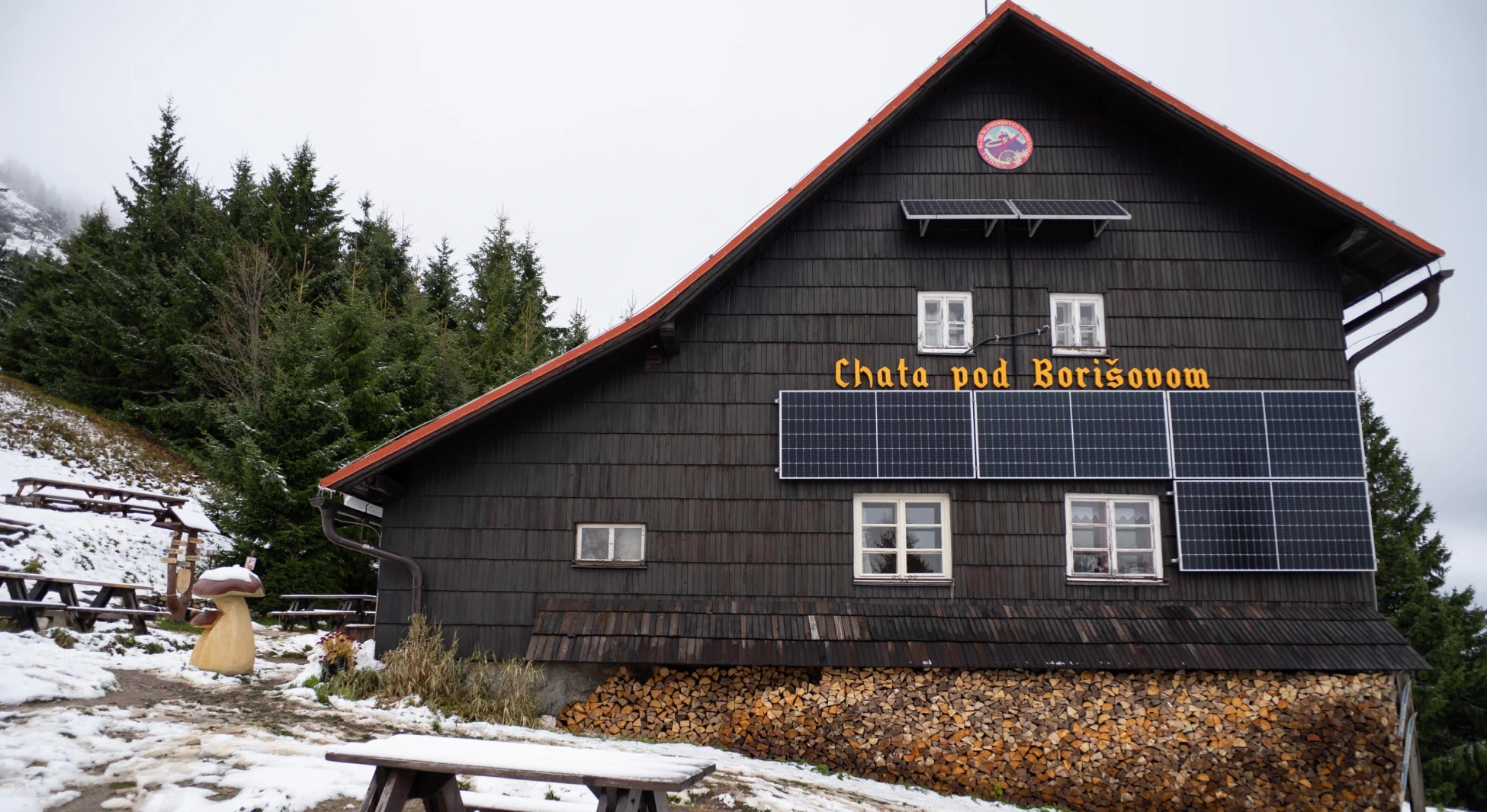
Idyll by the radiant warmth of the fireplace, snowflakes fluttering outside the window, and excellent sauerkraut soup – that is Chata pod Borišovom. When visiting in the autumn season, you will be charmed by the untamed energy of nature, which will sort out your thoughts, strengthen your condition, and offer space for reflection.
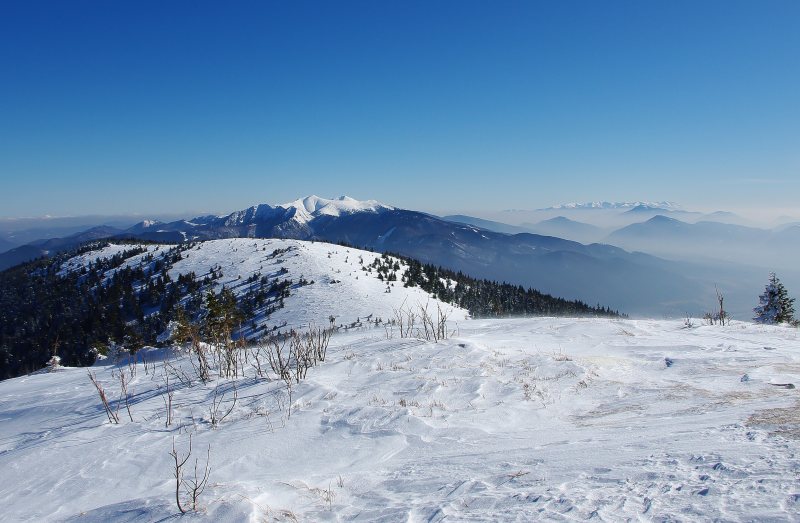
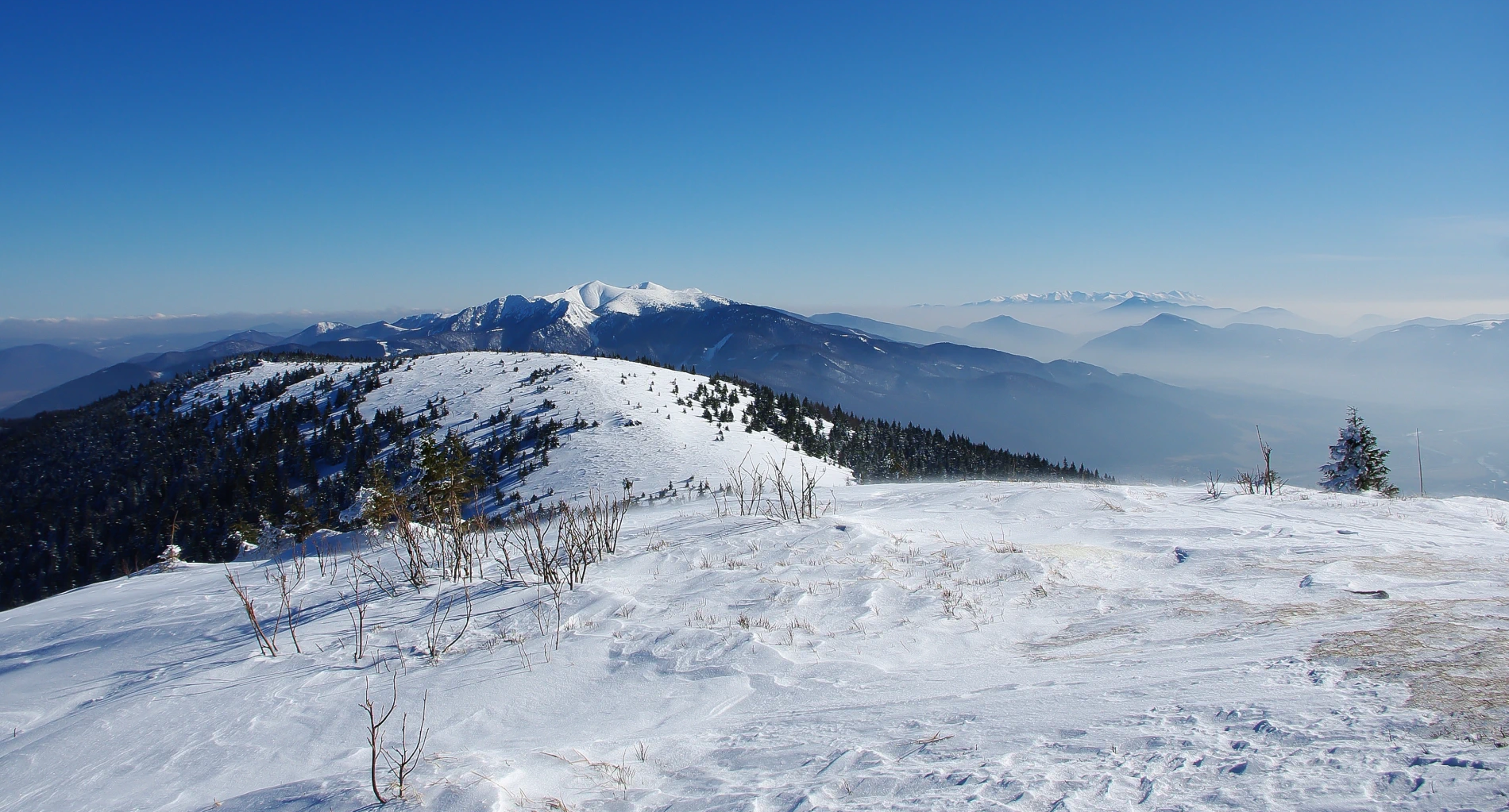
Are you looking for a hike that, besides a good elevation gain and fresh mountain air, also offers an unconventional historical experience? Head to Minčol (1,364 m above sea level), one of the most prominent and popular peaks of the Lúčanská part of Malá Fatra!
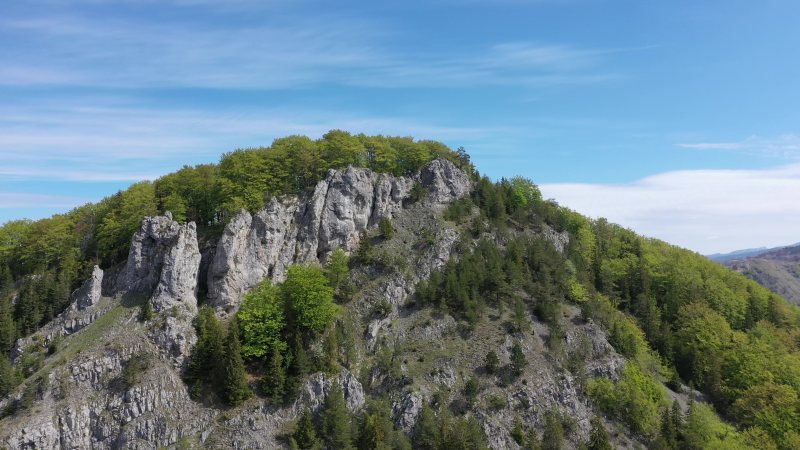
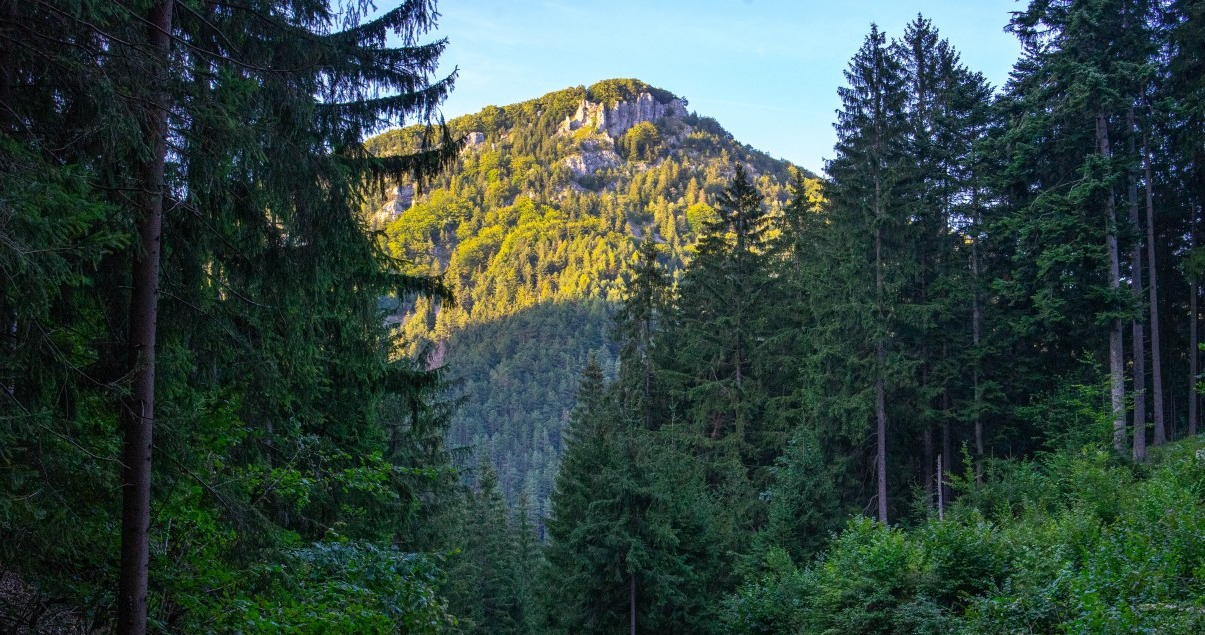
Are you tired of overcrowded hiking trails and looking for something near Žilina that will awaken the true explorer in you? Meet the peak Hoblík, an unmistakable rock landmark in the Lúčanská part of Malá Fatra, which proudly rises directly above the village of Višňové.
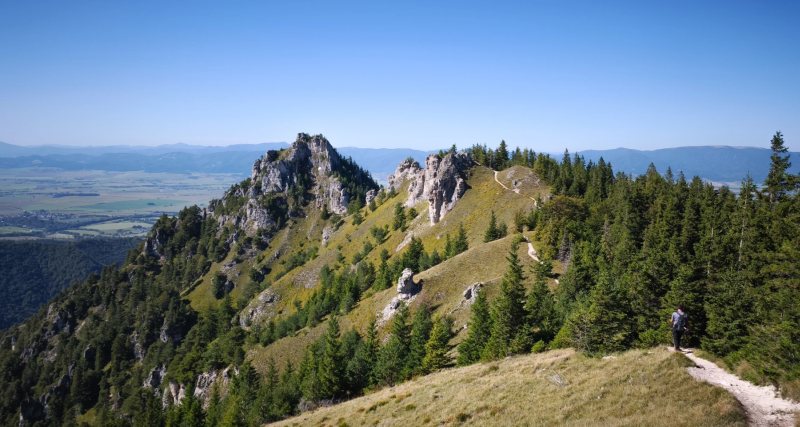
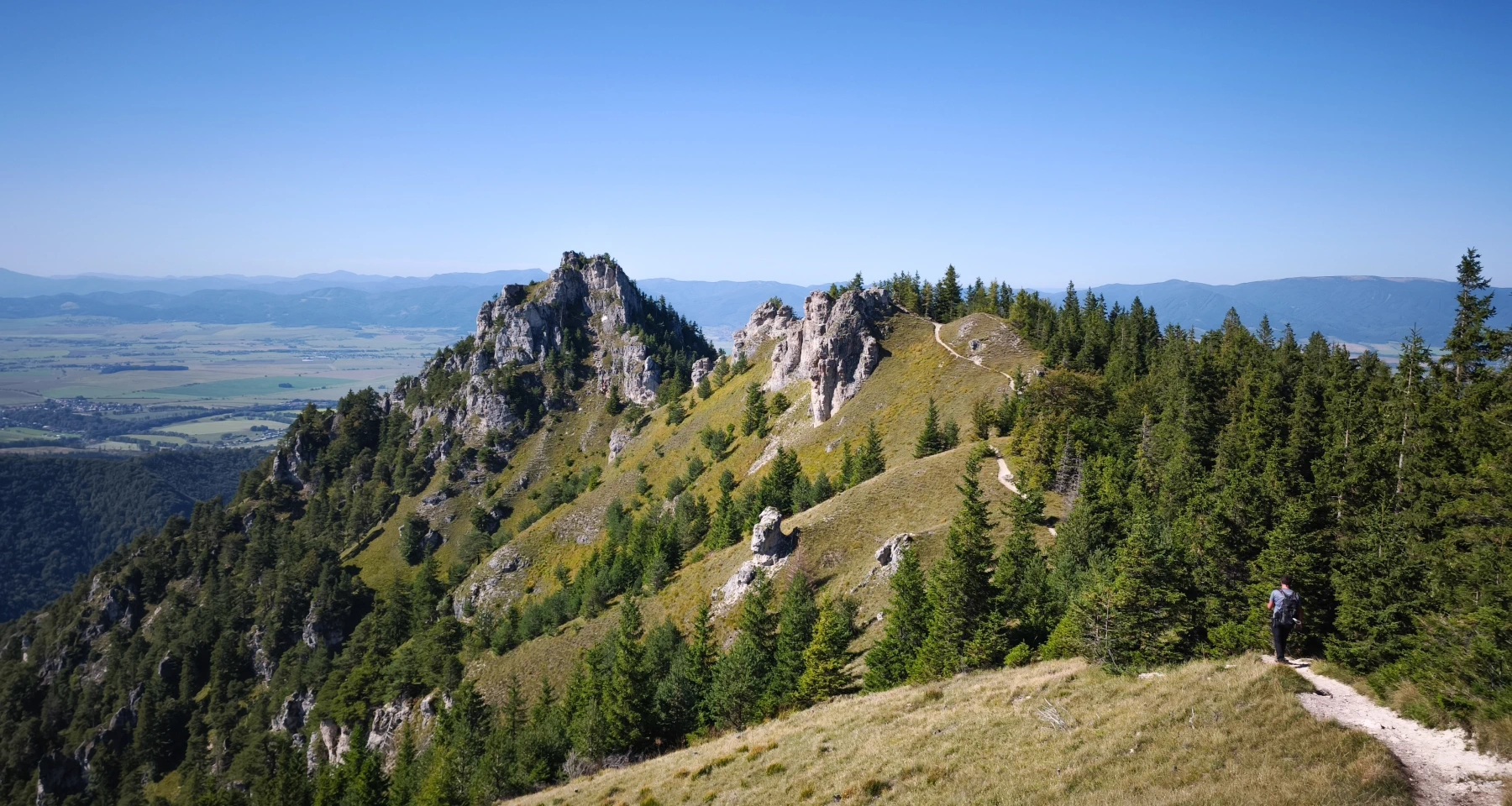
If you have ever traveled by car through the Turiec Basin, you have probably been captivated by the sight of two unmistakable hills. They are like siblings that complement each other. What happens when two absolute opposites meet in one mountain range? The result is a hiking experience you will not easily forget! The pair of iconic peaks Tlstá and Ostrá, rising above the picturesque Turiec Basin directly from the Gaderská and Blatnická valleys, offers a perfect mountain contrast. While one charms you with its vastness and tranquility, the other tests your courage on rocks and chains.
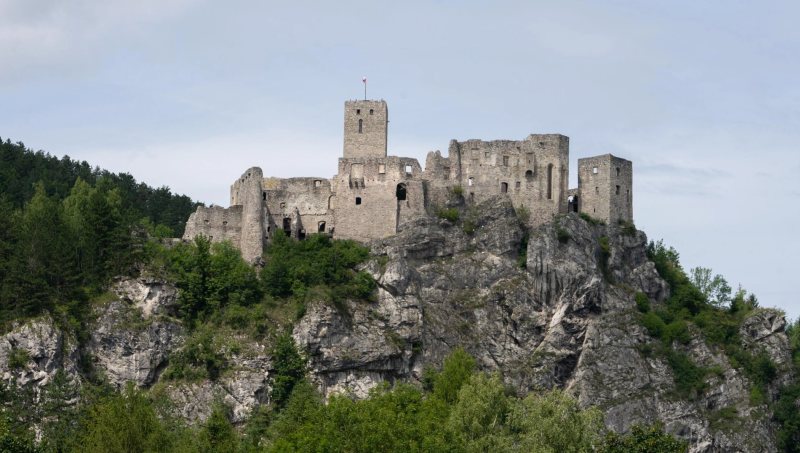
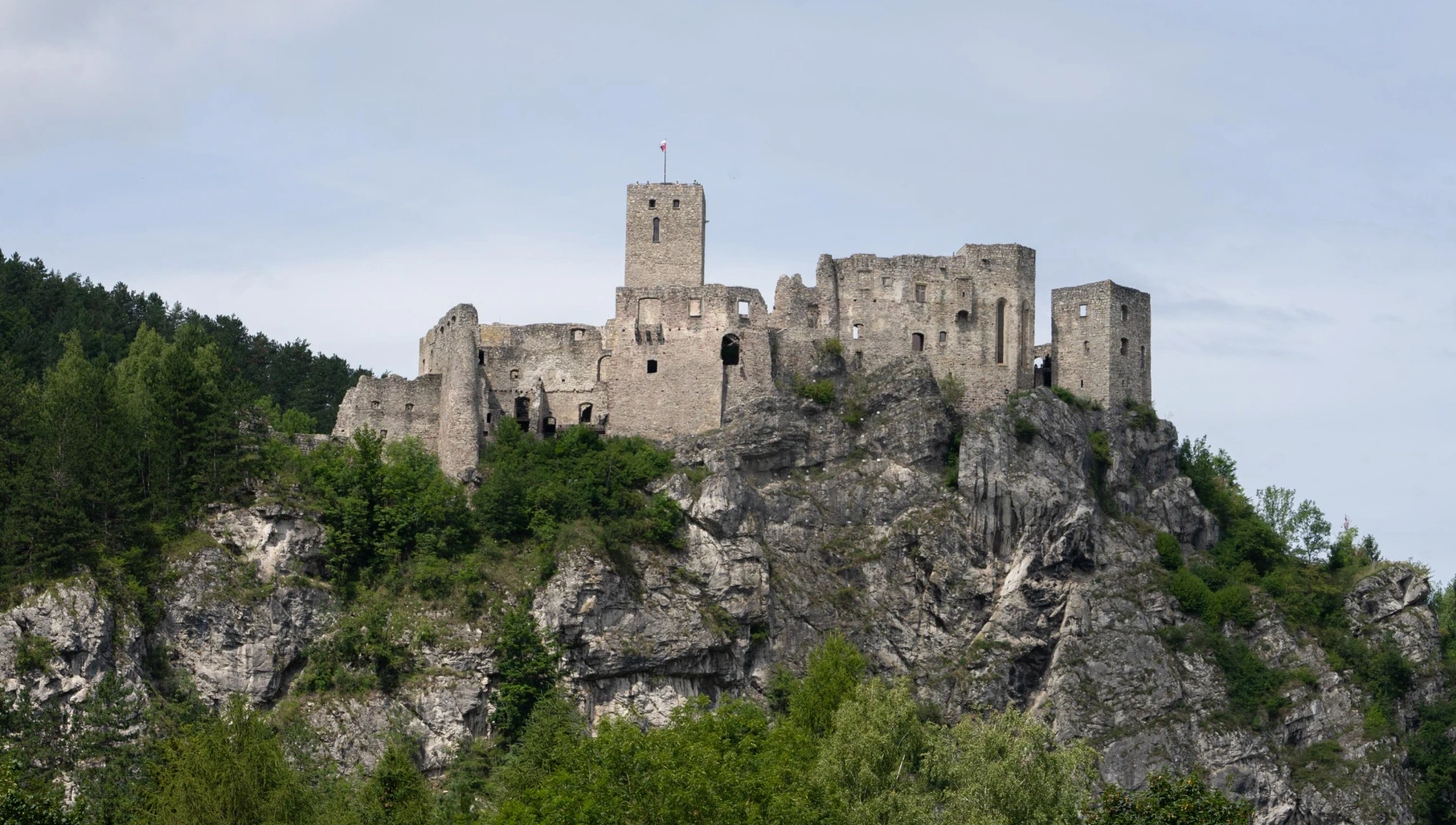
The first written mention of the stone Strečno Castle dates from 1316, when the Strečno estate is first mentioned. At that time, the estate must have already had its main seat in the form of a castle, although probably only a watchtower stood from it.
History of Strečno Castle
Origins and early development
The founding of the castle is attributed to the Balašovci family. It is assumed that the castle was built on an older foundation, probably a Slavic hillfort. The core of the castle, which had a polygonal floor plan with an area of approximately 400 m² (the so-called small castle), dates back to the first half of the 14th century. It consisted of a prismatic watchtower, a cistern carved into the rock, and a smaller residential building in the northeastern corner of the fortifications. From the beginning of its existence, the castle served as protection for the toll station, which was located at the ford across the Váh River below the castle. The castle is also mentioned during the ownership of Matúš Čák as the center of the larger feudal estate of Strečno.
Castle extension
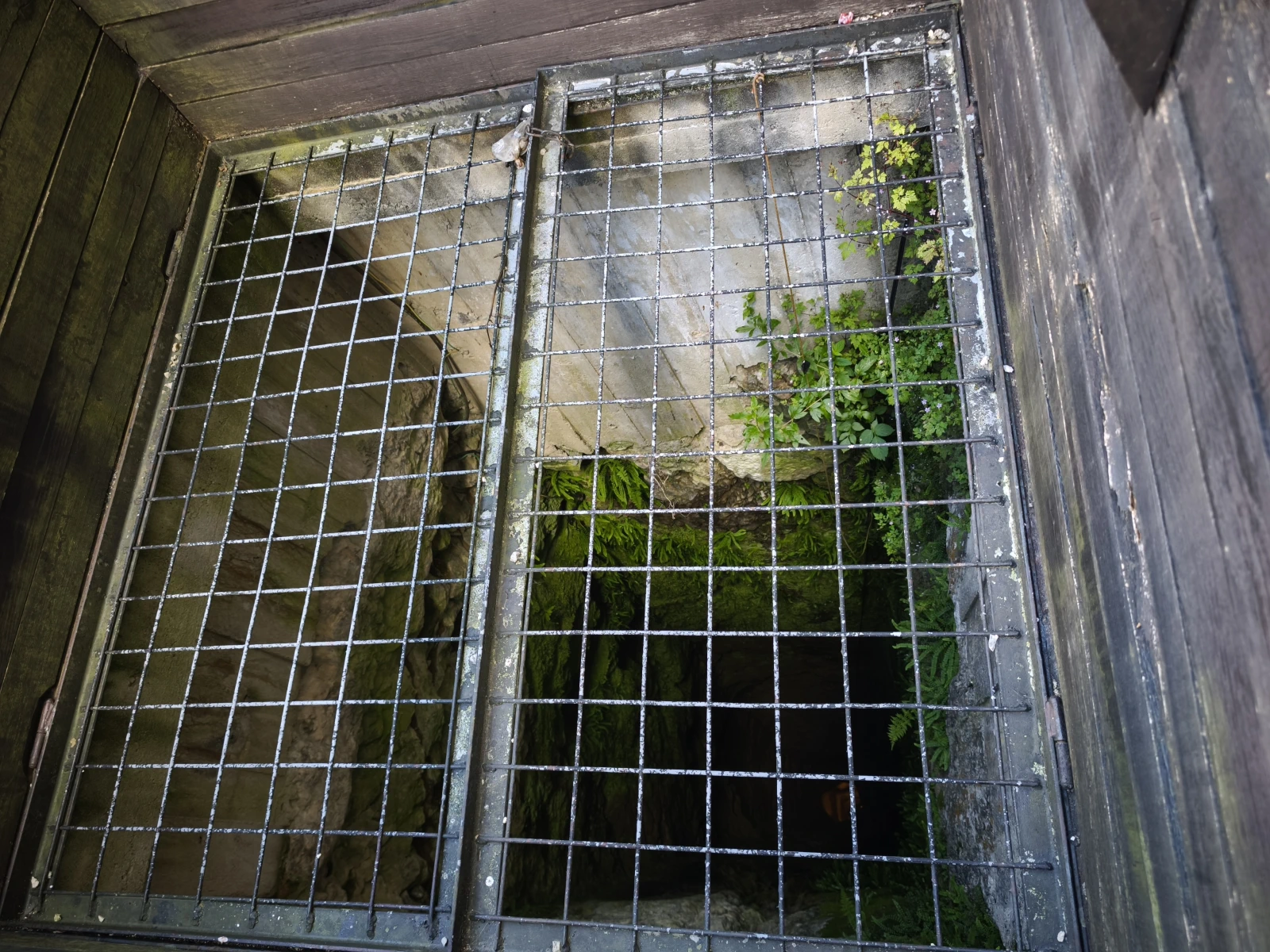
At the end of the first half of the 14th century, the outer bailey was completed. At the beginning of the 15th century, the castle was acquired by Queen Barbara of Celje, who had the northern palace and the castle chapel built. The entrance to the castle was moved to the Branská Tower with a barbican. During this period, a second prismatic tower was also built, closing off the northern outer bailey. The transformation of the castle into a unified fortified structure was completed with the construction of walls with three horseshoe-shaped bastions and one semicircular bastion protecting the main gate. The complex also included an 88-meter -deep well in the main courtyard.
Decline and Renaissance reconstructions
After a period of construction development, the castle began to decline at the beginning of the 16th century due to frequent changes of owners. From 1444 to 1469, it was owned by the Pongrác family from Liptovský Mikuláš, who also owned the nearby Old Castle. Other notable owners included Pavol Kiniži, Ján Zápoľský, and Mikuláš and Peter Kostka. This unstable situation changed only in the second half of the 16th century, when the castle came into the possession of Mikuláš and František Dersffy, who carried out a series of Renaissance reconstructions.
Period of decline and war damage
After the period of prosperity, Strečno Castle had several owners, but the castle never regained its form from the end of the 17th century. At the beginning of the 20th century, the sale to Samuel Hahn, who dismantled the castle ruins and sold them as building material, also negatively affected the poor state of the monument.
During the fighting in the Slovak National Uprising, the castle was damaged by a German artillery attack on the positions of the Czechoslovak Army and French partisans. Moreover, the poor condition of the walls threatened the safety of traffic on the main road below it. For this reason, in the 1960s, the urgent need for reconstruction began to be discussed loudly.
Reconstruction and current state
The comprehensive restoration finally began in 1974 and lasted 21 years (until 1995), due to its enormous technological and financial demands. However, the reconstruction was not accepted entirely without reservations – especially because of the extensive use of new, exposed concrete structures, which led to a visual change in the character of the castle. Originally, the castle ruins, remnants of palaces and towers formed a unified and romantic compositional whole with the surrounding rock mass. In later years, necessary remediation works were also carried out to statically secure the castle rock.
Currently, the castle is administered by the Považské Museum in Žilina. Inside, there is a permanent exhibition presenting archaeological finds from the surroundings, as well as the overall history of this majestic seat.
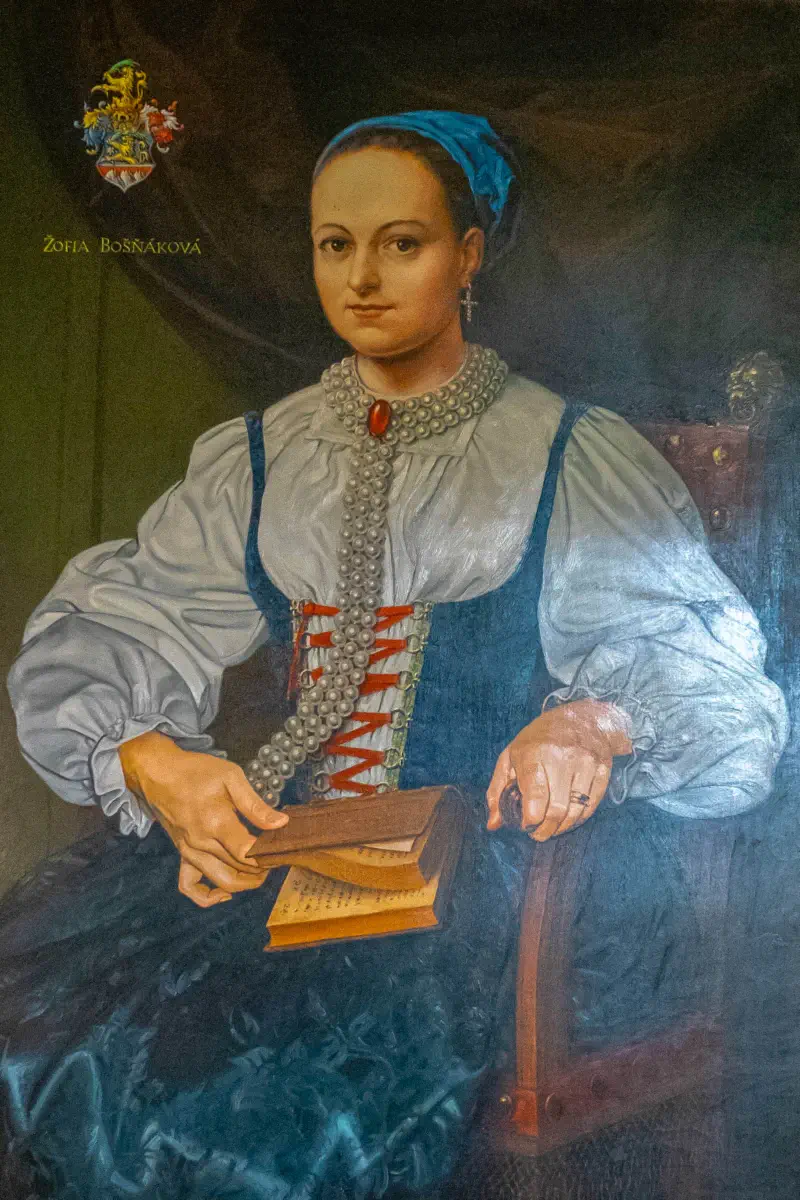
Žofia Bosniaková (1609 – 1644) was a Hungarian noblewoman, known primarily for her extraordinary charity, deep piety, and selfless help to the poor and sick. In the region of the Upper Váh River and throughout Slovakia, she is still venerated today as a symbol of kindness and a saint of the people.
-
Origin and life: She was born at Šurany Castle into the family of Baron Tomáš Bosniak. After the premature death of her first husband, Michal Serényi, she married František Vešeléni (Wesselényi), the future Palatine, and settled at Strečno Castle and in the manor house in Teplička nad Váhom.
-
Social sensitivity: In Teplička nad Váhom, she founded an almshouse (a shelter for the poor and sick) with a hospital. She personally distributed food, medicine, and clothing regardless of the origin or religion of her subjects. The tradition of baking small bread rolls, the so-called „bosniaks“, also dates from this period.
-
Miraculously intact body: She died young, at the age of 34, and was buried in the crypt of Strečno Castle. When imperial soldiers opened the crypt decades later, her body was found almost intact, which led to the mass emergence of a legend about her holiness.
-
Worship and tragic incident: Her mummified remains were later transferred to the Loreto chapel in the church in Teplička nad Váhom, where for centuries they were a destination for pilgrims. In April 2009, a mentally disturbed man set her body on fire directly in the chapel and destroyed it.
Žofia Bosniaková remains to this day one of the most prominent and beloved female figures of Slovak history, perceived as the embodiment of mercy and selflessness.
Panoramic view of Strečno Castle
Access and transport
1. By car
- Route: The castle lies near the main road I/18. From Žilina it takes about 15 minutes, from Martin approximately 20 minutes.
- Parking: Directly below the castle rock there is a large municipal paid parking lot. From there, a marked path leads to the castle (approx. 10 – 15 minutes on foot up a steeper hill).
2. By train (Very popular choice)
- Stop: Get off at the railway station Nezbudská Lúčka – Strečno.
- Access to the castle: The station is located on the other bank of the Váh River. You can cross to the other side in two ways: via the footbridge for pedestrians (connecting Nezbudská Lúčka with Strečno), or you can use the local Strečno ferry, which transports cars and pedestrians alike and is an experience in itself.
- From the river, it takes approximately 15 – 20 minutes of walking to the castle through the village and then uphill.
3. By bus
- Suburban lines from Žilina towards Martin or to surrounding villages stop at the stop Strečno, pod hradom or in the village center. From the stop it is only a short walk to the castle.
4. By bicycle
- A popular cycling route runs around Strečno along the Váh River (from Žilina via the Žilina Water Reservoir). Bicycles can be safely stored below the castle, but the climb directly to the castle with a bicycle is not possible.
5. Rafts on the Váh
- An interesting way to combine transport with an experience is rafting on the Váh River on traditional wooden rafts. The raft trip ends directly in Strečno, from where you can continue on foot to the castle.
Useful information:
- Opening hours: The castle has limited opening hours during winter (usually only weekends). The main summer season typically starts in April.
- Difficulty of the ascent: The access road from the parking lot is maintained (asphalt/steps), but quite steep. Children can manage the climb, but it is not suitable for strollers (there are steps in the upper part).
- Events: During the season, popular night tours or falconry performances are often held at the castle.
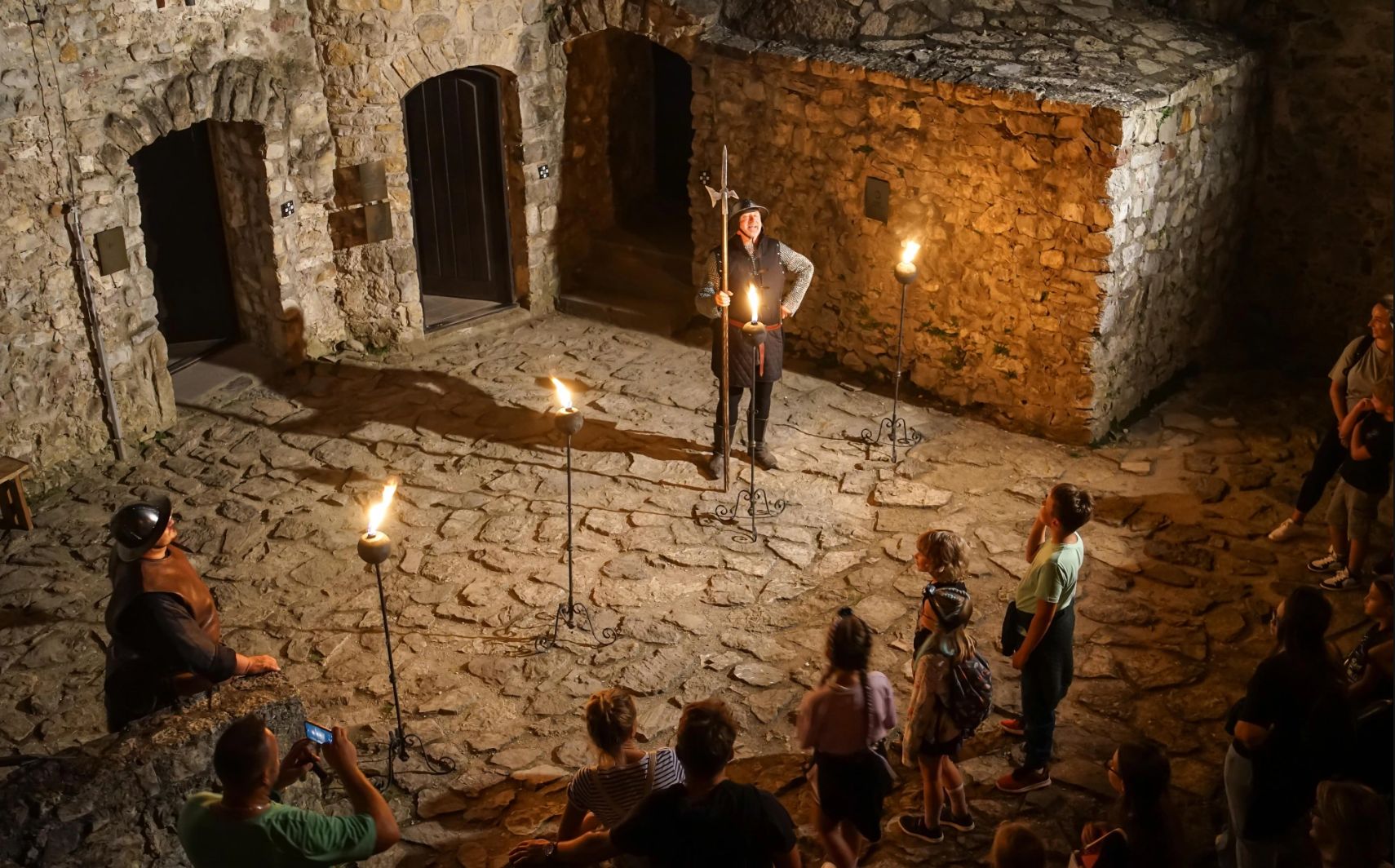
Photo gallery of Strečno Castle:


