
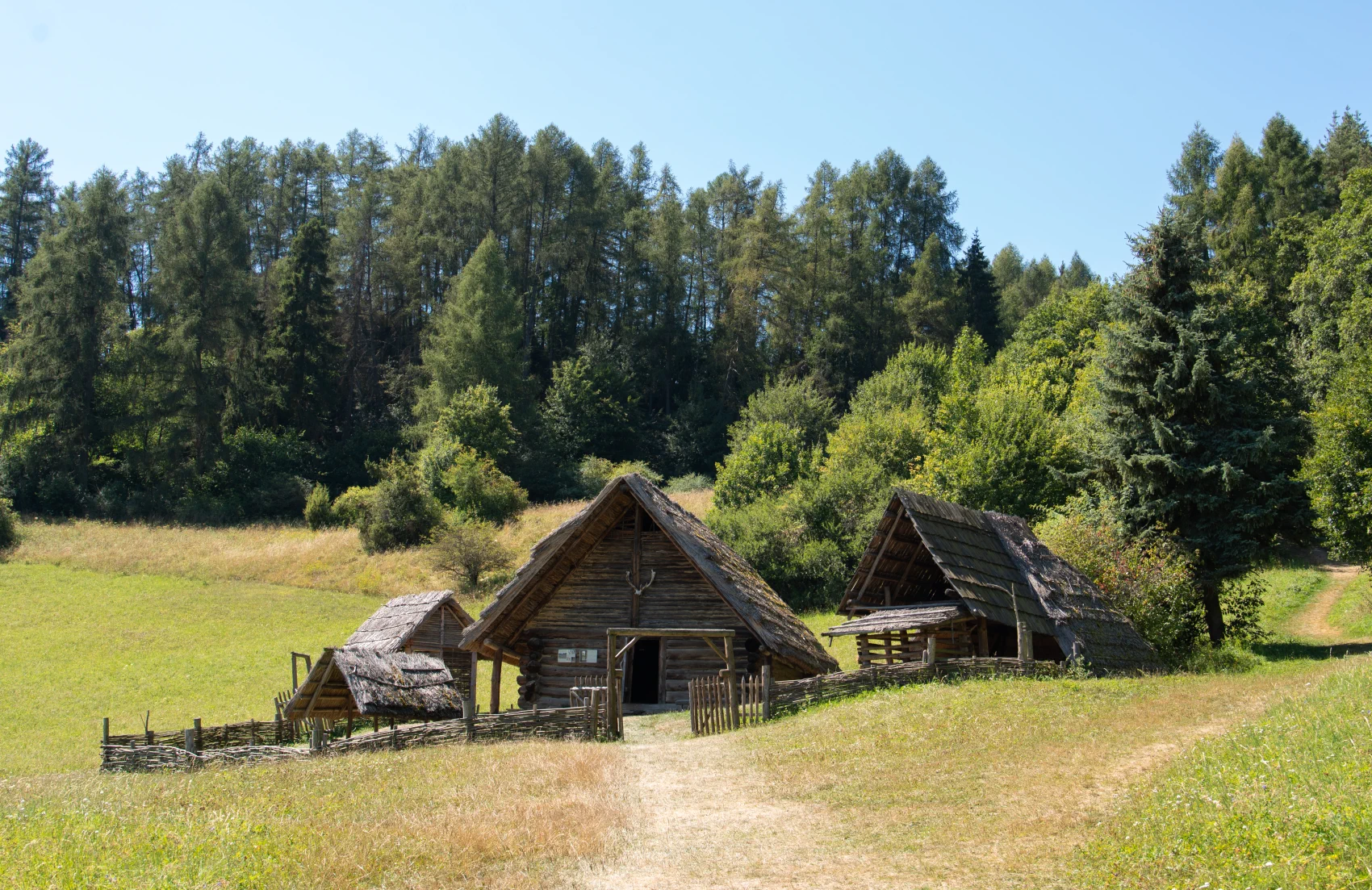
Travel back to the times of mysterious druids. Archeoskanzen Havránok will reveal the ancient secrets of Celtic settlement, ancient sacrificial sites, wooden fortifications, and the remains of a medieval castle – all with a breathtaking view over the waters of Liptovská Mara.
Archaeological Open-Air Museum Liptovská Mara – Havránok
The Archaeological Open-Air Museum Liptovská Mara – Havránok is one of the most significant archaeological sites in Liptov. It was established with the idea of preserving and presenting to the general public the results of long-term research that had been conducted here since the mid-1960s in connection with the construction of the Liptovská Mara water reservoir. In 1991, this hillfort was declared a national cultural monument.
Currently, there is a permanent exhibition of reconstructed structures from two historical periods:
-
Younger Iron Age: Visitors can see a residential manor with a pottery workshop and farm buildings, a sanctuary with a paved floor and sacrificial pit, as well as multiple fortifications with entrance gates.
-
Middle Ages: From the period of the 12th – 16th century, there is a timber-and-earth fort with fortifications. In addition, near the harbor pier, the original tower of one of the oldest churches in Liptov, the Church of the Virgin Mary, has been preserved.
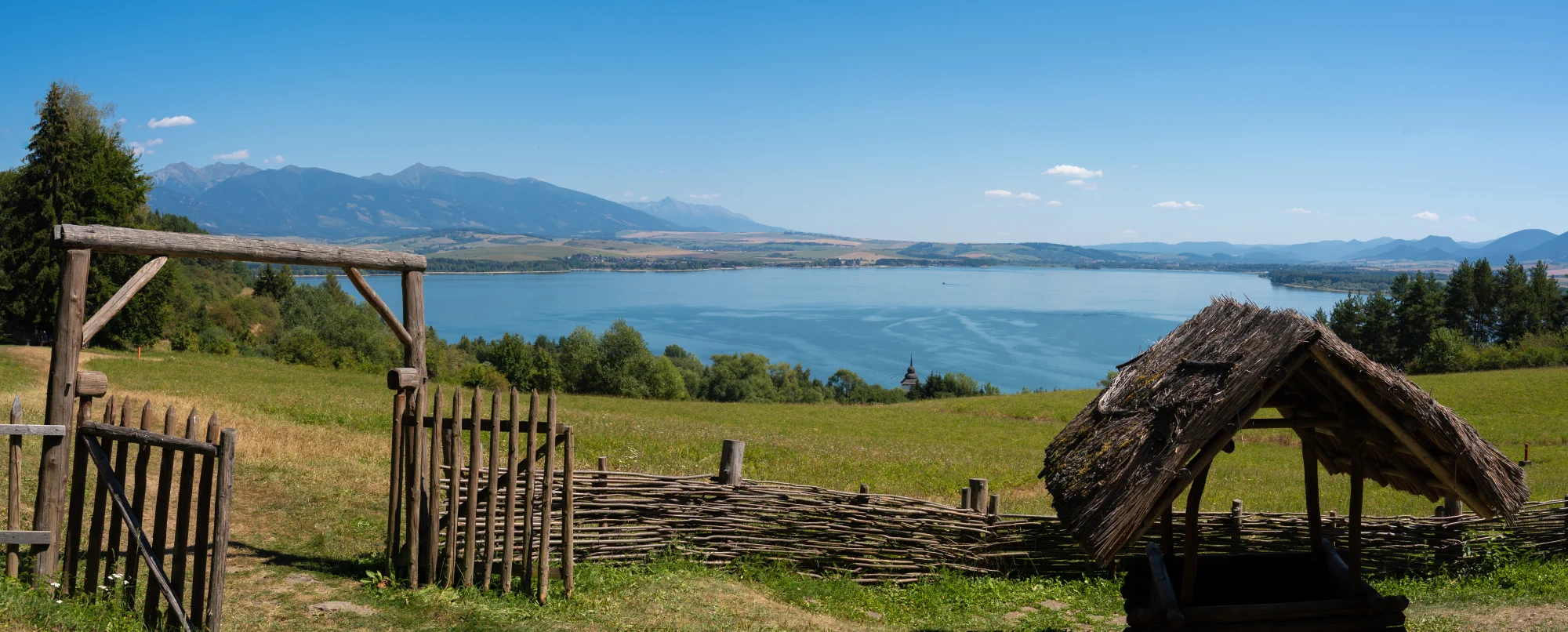
Výhľad zo skanzena Havránok
Significant objects at the hillfort
Fortifications and Celtic sanctuary Hillforts in the northern Carpathians represented a stable place in the settlement structure from the Bronze Age to the beginning of the Roman period. The basis of the local fortification was a rampart made of a wooden grid filled with stones and clay. With the arrival of Celtic cultural influences, double-faced stone walls and complex systems of defensive gates began to be built.
-
From the 2nd to 1st century BC, two bands of the front facing wall made of sandstone have been preserved.
-
Between these bands, a stone stele was discovered with a hearth and various sacrificial gifts, such as jewelry, coins, grain, vessels, and agricultural tools.
-
The entrance to the sanctuary was protected by a semi-tongue tower gate from the second half of the 1st century BC, which had an elevated northern part reinforced with a wooden structure and was protected from the inside by a terraced wall. A wooden palisade stood in inaccessible places.
Residential homestead The homestead is an example of a reconstruction of the way of living in the 3rd – 1st century BC. This residential area consists of several important parts:
-
Dwelling: It is a two-room log house built on a stone foundation with a gable roof covered with reeds. Inside, traces of a stone hearth were found. The space was used for living, household chores, and craft activities.
-
Pottery workshop: It consists of a shelter on beech posts, covered with a combined roofing of reeds and bark. There is a two-chamber kiln with a stoking pit used for firing ceramics, which in its current form is used for experimental purposes.
-
The courtyard area also includes a well and other farm buildings.
In addition to the objects mentioned on the information boards, the Havránok archaeological open-air museum also hides other interesting places and secrets revealed by archaeological research.
-
Druid sanctuary with a dark history: The Celtic cult site is complemented by a wooden colonnade decorated with animal skulls. During archaeological excavations, not only animal bones but also human bones with traces of violence and ritual sacrifice were found in the sacrificial pit. The Celts performed magical rituals here to win the favor of the gods (for example, to summon rain).
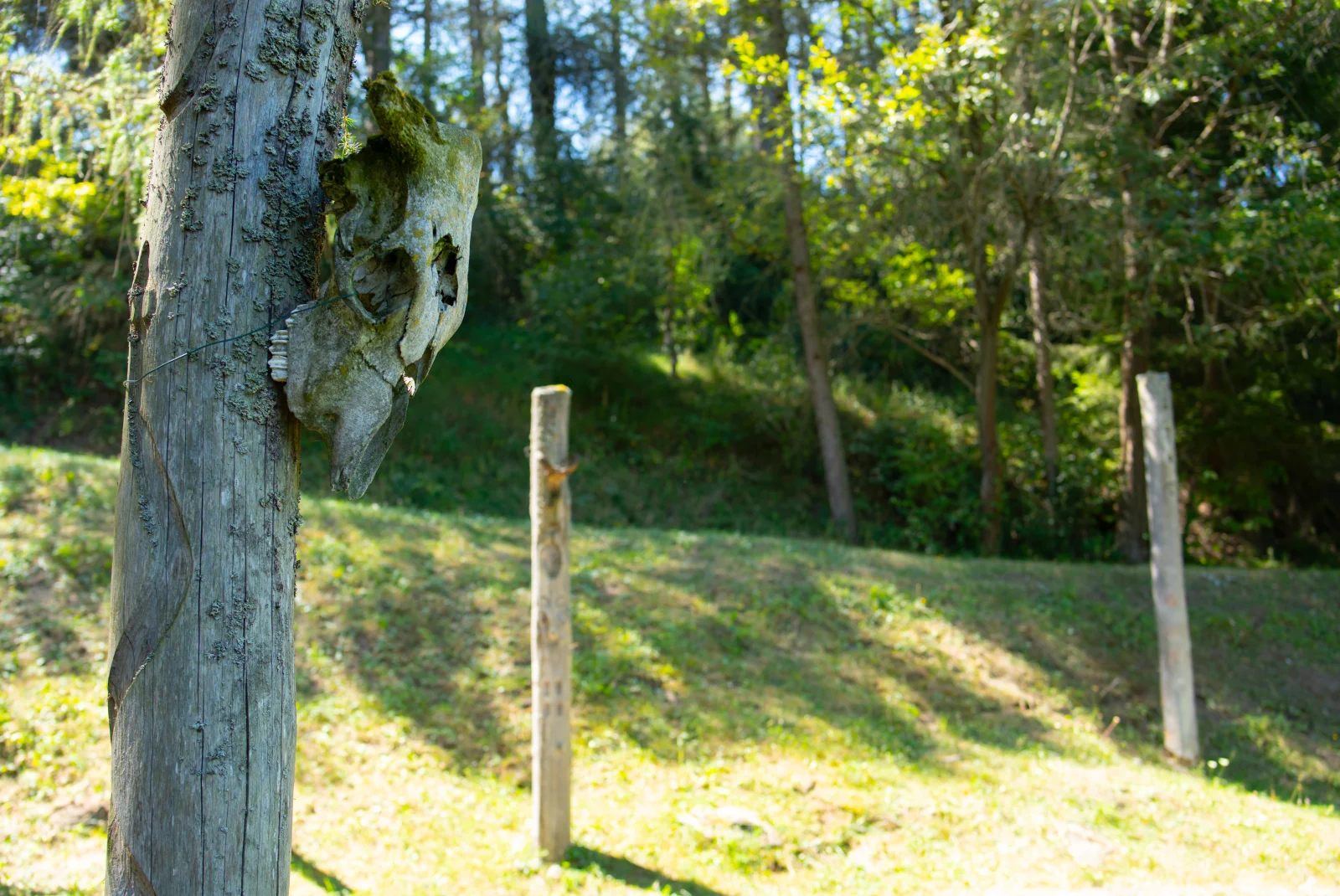
Site of sacrificial rituals
-
Wooden watchtowers: As you walk through the area, you will come across watchtowers that were once used to observe the surroundings. Today they serve as excellent viewpoints offering a beautiful panoramic view of the entire Liptovská Mara and the peaks of the Tatras.
-
Details of the medieval fort: The medieval timber-and-earth fort (with the basement of a wooden residential tower and a paved courtyard) also includes a reconstructed defensive moat with a bridge. From the 12th to the 15th century, this fort withstood Hussite raids and provided refuge for the inhabitants from marauding knights.
-
život a rituály naživo (počas sezóny): Havránok nie je len statickým múzeom. V letných mesiacoch sa areál mení na "živú osadu", kde sa konajú podujatia (napr. Cesta históriou alebo S deťmi za Keltmi). Môžete tu vidieť ukážky starých remesiel, historického šermu, razenia mincí či rekonštrukcie keltských obradov.
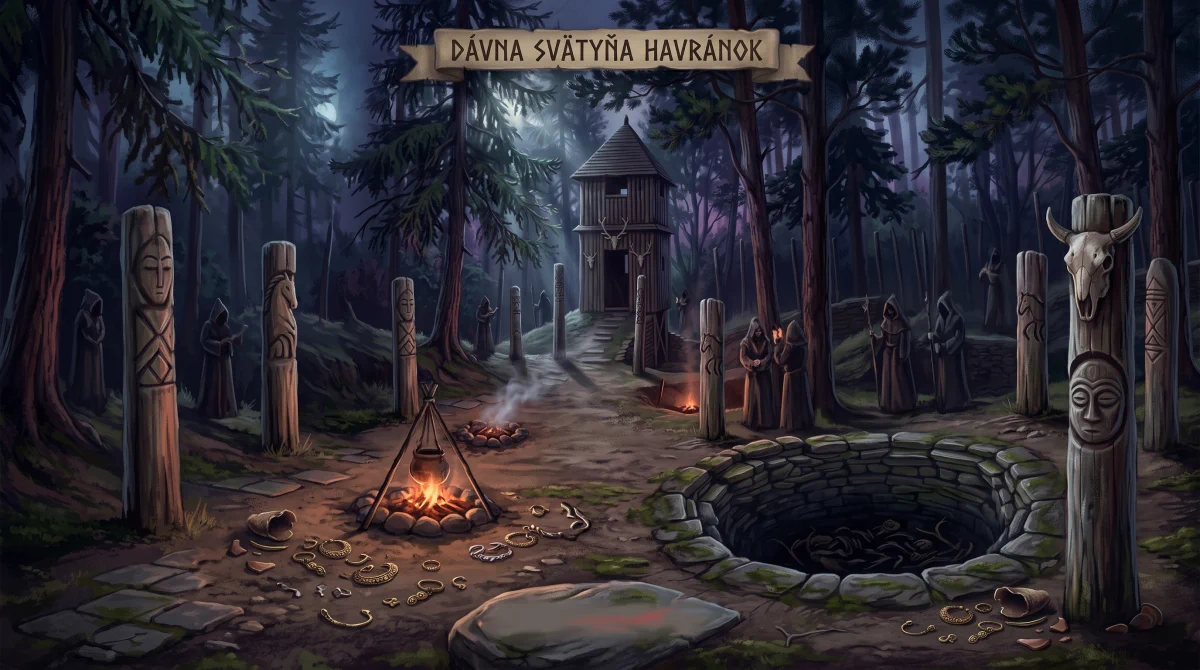
Photo gallery:


There are no comments yet. Be the first!