
Discover the charm of the Museum of the Slovak Village in Martin
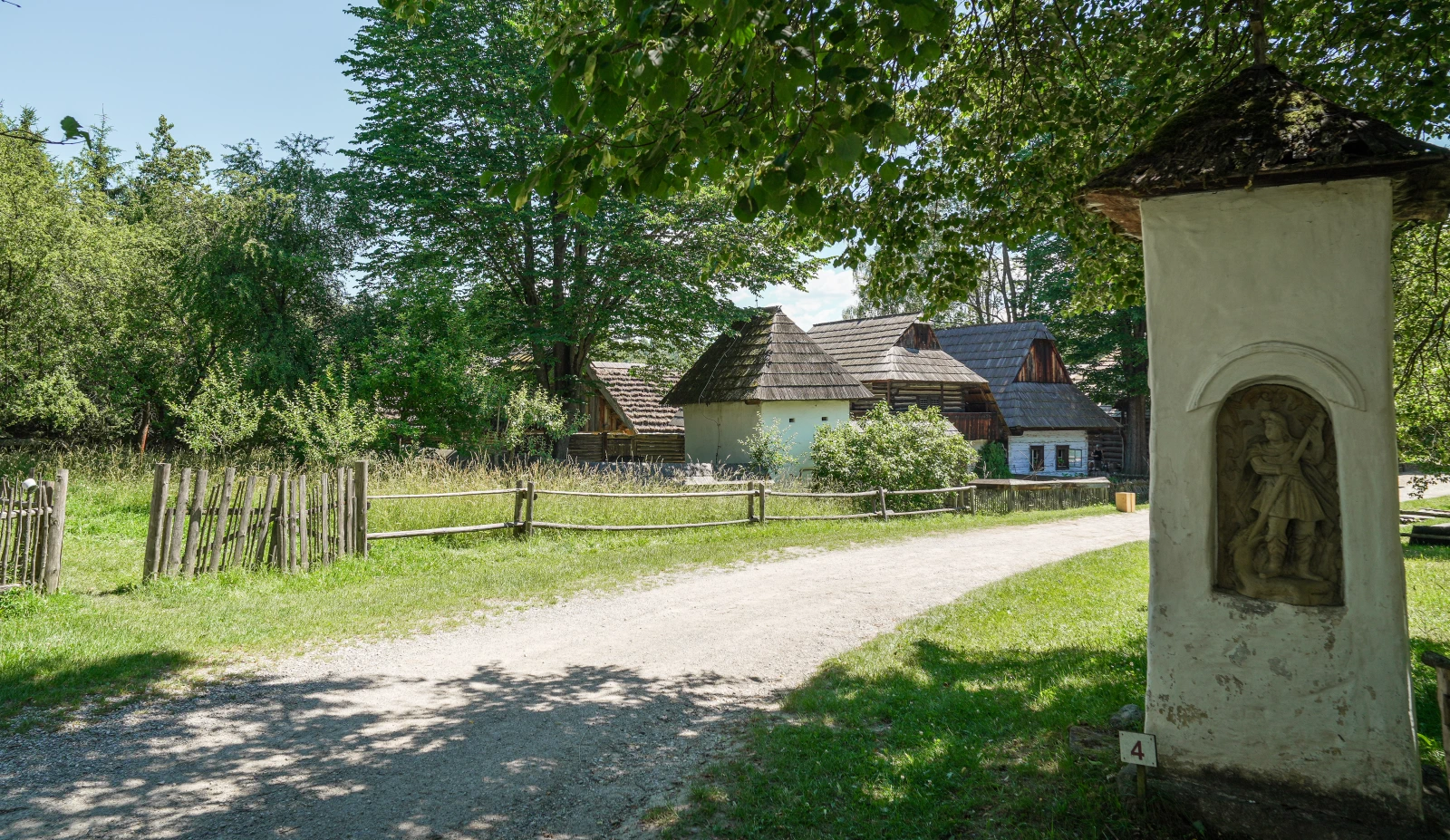
Take a step back in time for a moment. In the picturesque setting of Jahodnícke háje, just a stone's throw from the center of Martin, lies Museum of the Slovak Village – the largest ethnographic open-air exhibition in Slovakia. This place is not just an "ordinary" museum. It is a living village where time has stood still and which breathes the stories of our ancestors.
Whether you are a history lover, looking for an ideal tip for a weekend trip with your family, or you just want to relax in beautiful nature, the Martin open-air museum will immediately draw you into its unique atmosphere.
What can you look forward to?
- Architectural gems: Stroll among more than 100 traditional wooden houses, farmsteads, craft workshops, and a beautiful wooden church. The exhibition will present the best from the regions of Orava, Liptov, Kysuce-Podjavorníky, and Turiec.
- Film nostalgia: Did you know that the legendary fairy tale Perinbaba by Juraj Jakubisko was filmed right in these wooden cottages? During a walk you will quickly find out why – the genius loci of this place is truly magical.
- Živé tradície a folklór: Počas celého roka múzeum ožíva desiatkami tematických podujatí. Od veselých fašiangových sprievodov, cez veľkonočné zvyky a stavanie mája, až po ukážky tradičných remesiel a folklórne vystúpenia.
- Paradise for families with children: The spacious, green area offers children a safe space to explore. The animals in the enclosures and the authentic environment show them in a playful way what life looked like before technology took over the world.
Interactive map of the area
The author of the painted orientation plan of the Museum of the Slovak Village in Martin, which is also placed at the entrance to the area, is V. Hraško.
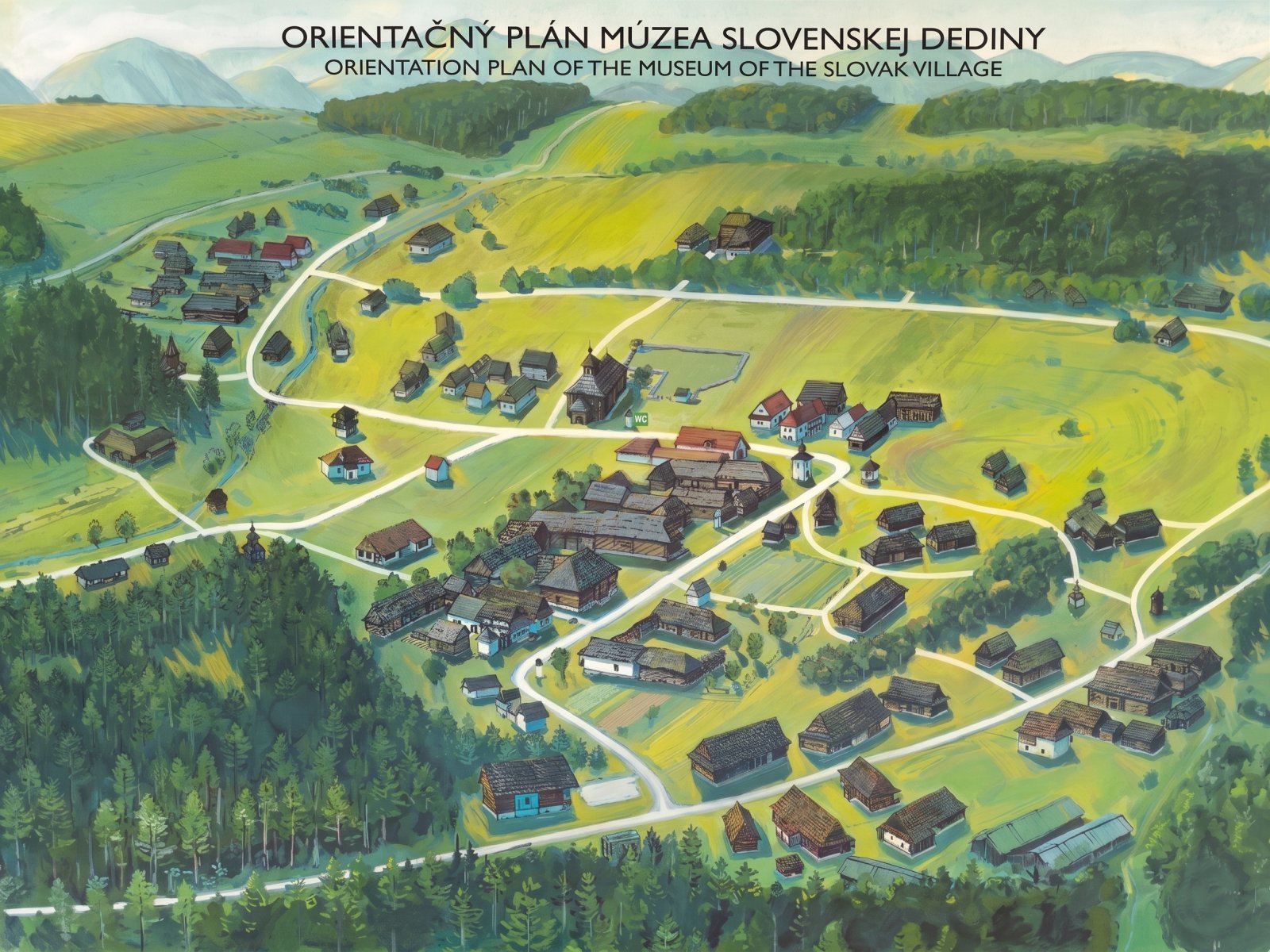
WC
Klokočov Bell Tower - Kysuce Region, Podjavorníky
Exit from the area
Entrance to the area
Kysuce Region, Podjavorníky
WC
Orava Region
Turiec Region
Liptov Region

Restaurant
Dozens of themed events for visitors
February: The carnival is already ending
Traditional carnival mask processions, the burial of the bass with mourners, folk music and tasting of typical carnival specialties.
April: Easter in the Village
Celebration of spring holidays. Demonstrations of traditional braiding of whips from willow twigs, decorating Easter eggs with various techniques, and learning about customs such as the carrying out of Morena.
April: Love in the Village
An event opening the summer season, dedicated to spring love customs, gifts of love, and traditional maypole raising.
May: Shepherd's Sunday
A day dedicated to shepherding and mountain farming. It includes demonstrations of sheep shearing, wool processing and traditional production of sheep cheese, oštiepok or parenica.
May: Children's Sunday
A programme prepared by children for children. It includes puppet theatres, historical period lessons in an old school, traditional children's games and creative workshops.
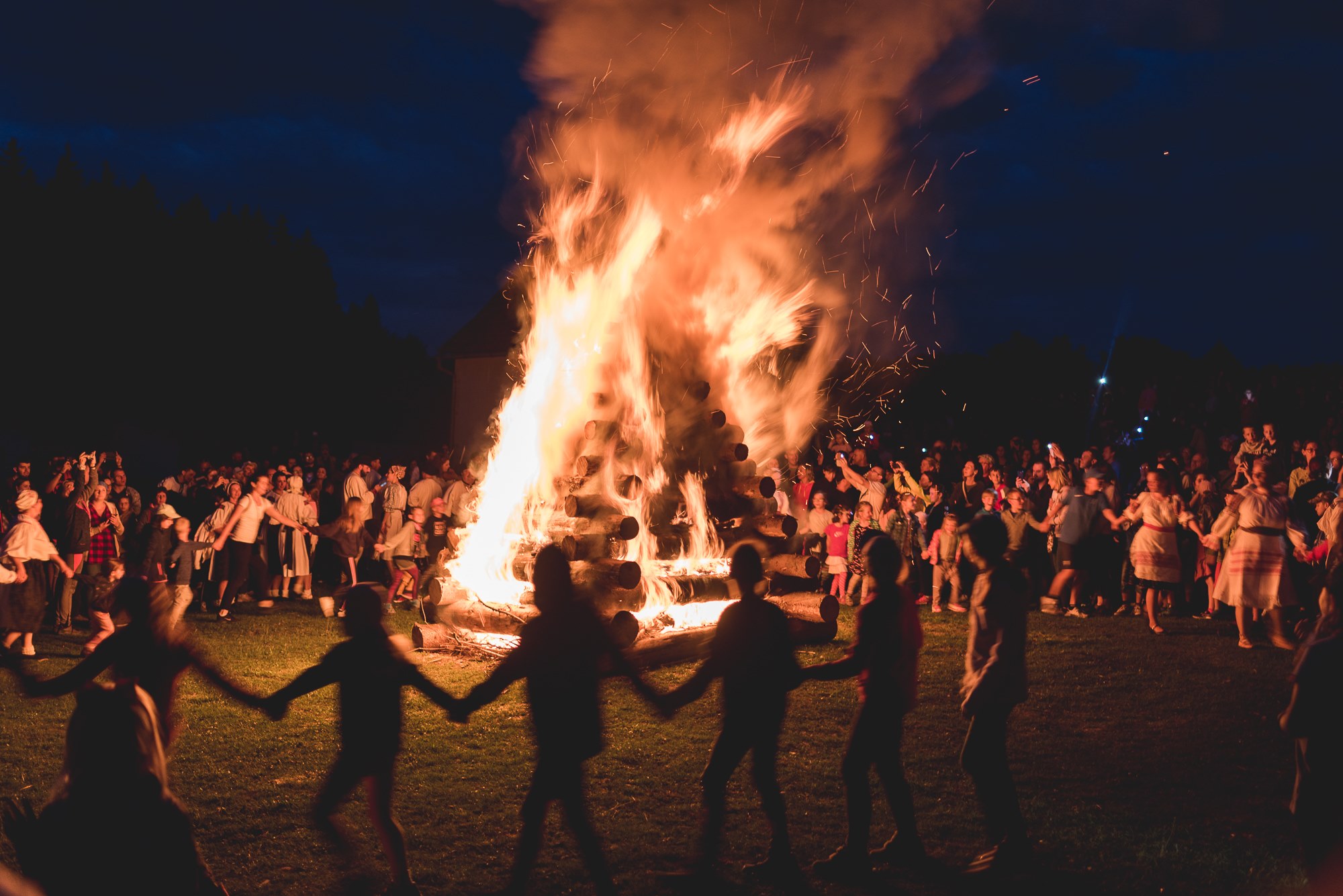
June: On St. John's Day
An exceptional evening event associated with the celebration of the summer solstice. The magical atmosphere of the open-air museum, St. John's treasure hunt and reading of legends.
June: Turiec Folklore Festivities
One of the most significant regional festivals, bringing together folklore ensembles, groups, and folk music bands from all of Turiec and its surroundings.
August: Flax Sunday and Harvest Festival
Celebration of the end of harvest with traditional harvest wreaths. Demonstrations of flax processing – from scutching and combing to weaving linen on a loom.
August: Te prindžaras amen (Let's get to know each other)
A multi-genre event focused on presenting the culture, music, dance, and crafts of the Roma in Slovakia.
September: St. Michael's Fair
A large autumn fair where dozens of folk craftsmen gather. Rich cultural program and demonstrations of old craft techniques.
September: Man and Nature
An environmentally themed event connected with horticulture, beekeeping, mycology, and the use of natural resources in traditional life.
October: When Winter Asks
Preparation of the farm for the winter season. Cutting cabbage, processing potatoes, preserving food, and demonstrations of various autumn works.
December: Christmas in the village
Conclusion of the ethnographic year with demonstrations of pre-Christmas and Christmas customs – visits of Lucia and St. Nicholas, baking of Christmas wafers and lead pouring.
Website, contact, map:
Photo gallery:


There are no comments yet. Be the first!