
How to properly remove a tick
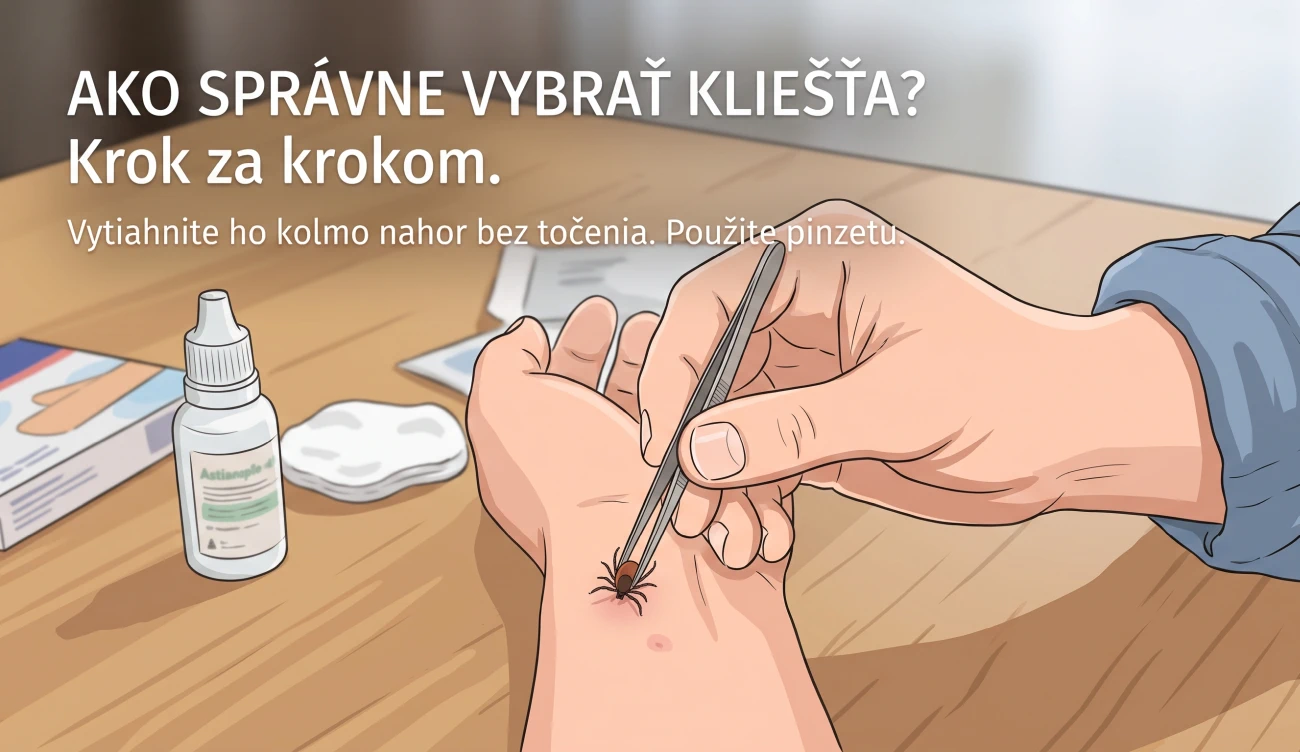
- Prepare the right tools: Use fine tweezers, special tick removers, a hook, or a tick removal card.
- Grasp the tick correctly: Catch it as close to the skin surface as possible, ideally by the head, not the abdomen.
- Pull slowly and straight: Remove the tick with a smooth, steady pull straight upward.
- Check the wound: If the head remains in the skin, do not despair, the body will deal with it like a splinter.
- Disinfect the area: Clean the wound and your hands with alcohol, iodine tincture, or soap.
- Safely dispose of the tick: Flush it down the toilet or wrap it in tape. Never squeeze it with bare fingers.
What you should definitely NOT do (common myths)
- Do not twist it: A tick has no thread, it may tear off.
- Do not use oil, ointment, or nail polish: Suffocating the tick will cause it to regurgitate the contents of its stomach (and any infections) into your blood.
When to see a doctor
For the next 30 days, monitor the bite site. Visit a doctor if the following appears:
- Erythema migrans: A red spot that enlarges and fades in the center (looks like a target).
- Flu-like symptoms: Fever, chills, fatigue, muscle and joint pain.
Tip: Note the date you found the tick. Your doctor will appreciate this information if symptoms occur.
Tick-borne diseases
1. Tick-borne encephalitis (Vaccination EXISTS)
It is a viral disease attacking the brain. Vaccination is the best protection. The basic schedule consists of three doses (ideally starting in winter). A booster is needed after 3 years and then every 3 – 5 years.
Tick-borne encephalitis most often manifests as a two-phase disease, which attacks the central nervous system 7 to 14 days after infection. Unlike Lyme borreliosis, the tick-borne encephalitis virus does not cause a typical red spot on the skin. Transmission occurs either by tick bite or by consuming unpasteurized dairy products (especially sheep and goat).
1. Phase – “Flu-like” (lasts 2 to 6 days)
After the incubation period, symptoms similar to a common viral infection appear. Many patients in this phase do not even suspect it is encephalitis:
- Elevated temperature to fever
- Headaches, joint and muscle pain
- Marked fatigue and weakness
- Nausea, loss of appetite, or vomiting
After this phase, a period of apparent calm (without symptoms) usually occurs, lasting 1 to 20 days. In some people, the disease completely heals at this point.
2. Phase – Neurological (inflammation of the brain and meninges)
If the virus penetrates the nervous system, a second, much more severe phase with high fevers begins:
- Sudden and unbearable headaches, stiff neck (inability to tilt the head forward so that the chin touches the chest)
- Photophobia (sensitivity to light) and vomiting
- Dizziness, tremor, balance and coordination disorders
- Disorientation, memory disorders and confusion
- Paralysis of muscles, especially in the face or upper limbs
2. Lyme disease (NO vaccine exists)
Bacterial disease for which there is currently no vaccine. The good news is that if caught early, it can be successfully treated with antibiotics. Prevention is the only protection. Lyme disease most often manifests 1 to 4 weeks after a tick bite. The main warning sign is an enlarging red spot with a pale center (erythema migrans). Accompanying symptoms include general fatigue, fever, headache, muscle and joint pain. Early antibiotic treatment is crucial.
How to create a "bulletproof" shield
1. Clothing (Mechanical barrier)
- Wear light colors (you will see the tick sooner).
- Long sleeves and trousers are essential.
- Trick: Tuck your trousers into your socks – the tick cannot get under them to your skin.
2. Proper chemistry
- Skin repellents: Look for DEET (at least 20-30%) or Icaridin.
- Permethrin for clothing: It is not sprayed on the skin, but on clothing and footwear. After drying, it lasts through several washes and kills ticks.
3. Movement in the terrain
- Stay in the middle of the trails. Ticks wait at the edges of meadows and in the grass (not in the treetops!).
4. Ritual after returning
- Immediate shower (will wash off ticks that have not yet attached).
- Thorough body check (armpits, groin, knees, navel, behind the ears).
- Put clothes in the dryer on high heat – dry heat will kill ticks.

There are no comments yet. Be the first!